The Best Knife Sharpening Tools for Home Chefs (And How to Actually Use Them)
If you've ever pushed harder on a knife just to get through a tomato skin, that extra force is exactly what makes kitchen injuries happen. A dull knife demands more pressure, and more pressure means less control. Keeping your blades sharp isn't just about cooking performance; it's one of the most practical safety habits in the home kitchen.
The best knife sharpening tool for home chefs is a dual-grit whetstone in the 1000/3000 range, which safely restores and refines a blade edge without the over-grinding risk of most electric or pull-through sharpeners. That said, the right tool depends on which knife you're working with and where you are in your maintenance routine.
Before we go further, it helps to understand that honing and sharpening are two separate actions. Honing realigns the blade edge after regular use and should happen every few cooking sessions. Sharpening, which grinds away metal to create a fresh edge, only needs to happen every few months. Treating them as the same thing is where most home cooks go wrong.
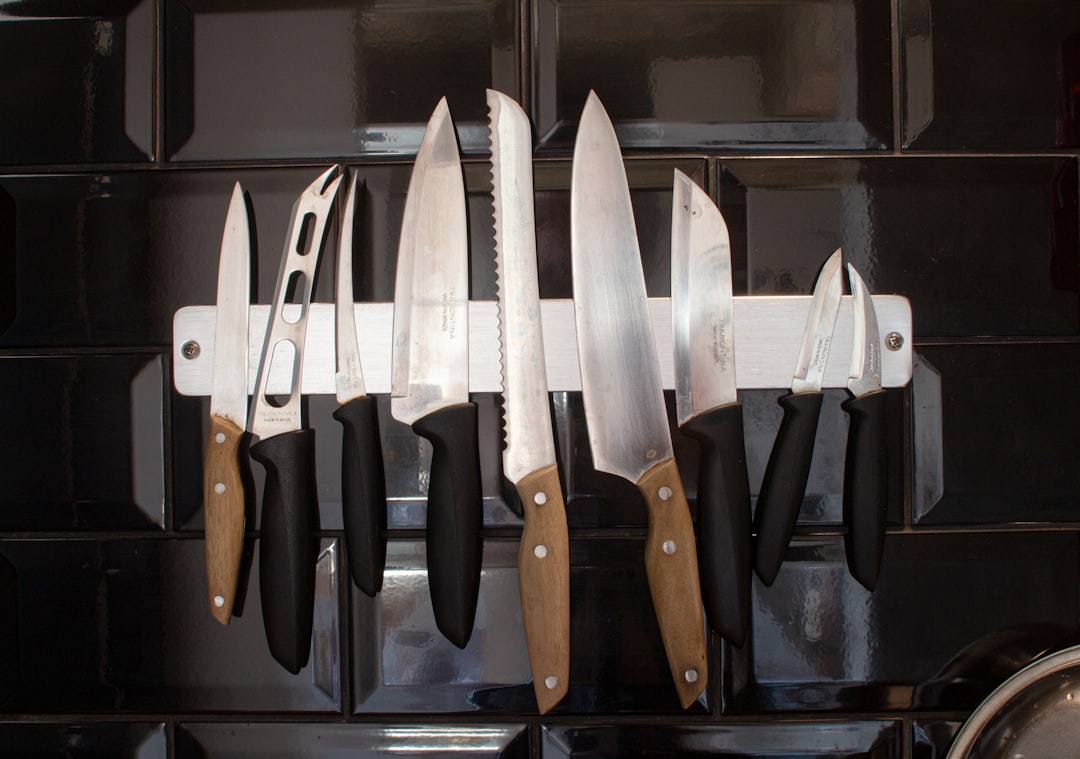
Most home chefs own three main knives: a chef's knife, a paring knife, and a serrated bread knife. Each one responds differently to sharpening tools, and what works perfectly on your 8-inch chef's knife can actively damage your bread knife. We've seen both sides of this in testing and in the kitchen, and our guide on how to sharpen a kitchen knife walks through the hands-on technique in detail.
I'm Sophia Garcia. I spent over a decade sharpening knives in professional restaurant kitchens before retiring to test and review kitchen tools here at The Top Kitchen. The recommendations you'll find below come from that real-world experience, cross-referenced with independent testing from sources like Serious Eats and Allrecipes. Let's get into it.
Why Home Chefs Struggle to Keep Their Knives Sharp (And What's Actually Going Wrong)
The problem isn't that home cooks don't care about sharp knives. The problem is that the habits required to maintain a sharp edge are counterintuitive, and the most accessible sharpening tools on the market can actually accelerate blade wear when used without care.
Sharpening too infrequently is the most widespread issue. A chef's knife used daily should be honed before every serious cooking session, and it should see a whetstone every three to four months. Most home cooks skip honing entirely and grab a pull-through sharpener only when the blade feels obviously dull, which, by that point, means the edge has been neglected for far too long.
Pull-through sharpeners remove far more metal per pass than a whetstone does. The abrasive carbide or ceramic V-slots in a pull-through are fixed and aggressive; drag your knife through a dozen times and you've taken off as much metal as several whetstone sessions would. A knife sharpened exclusively with a pull-through will literally shrink down to a stub over a few years. This is documented clearly in independent reviews at Serious Eats, and it's something I watched happen to line cooks who didn't know better early in my career.
Honing technique matters more than most people realize. When you apply too much downward pressure on a honing rod, you're not realigning the edge, you're rolling it further out of alignment. The motion should be light, almost like you're stroking the blade along the rod rather than grinding it. This single error accelerates dulling and sends home cooks back to the sharpener far more often than they need to go.
Storage is a silent edge-killer. Knives thrown loose into a kitchen drawer suffer micro-abrasions every time the drawer slides open, because the blade edge knocks against other utensils and the drawer walls. A magnetic knife strip or a proper knife block preserves sharpness between sharpening sessions in a way a junk drawer simply can't.
Blade angle matters enormously, and most home cooks don't think about it. German-style knives typically have a 20-degree blade angle, while Japanese-style knives are usually ground to 15 degrees. Running a Japanese knife through a sharpener calibrated for 20 degrees doesn't just produce a suboptimal edge; it actually destroys the factory bevel and creates an uneven, unpredictable geometry. The community discussions on Reddit's r/sharpening reinforce this constantly, and it's one of the first things I cover when talking to new home cooks.
Serrated knives are a category where almost every home chef is flying blind. You can't sharpen a serrated bread knife on a flat whetstone or pull it through a standard pull-through sharpener. Each individual serration needs to be addressed with a tapered ceramic rod, and most home kitchens don't have one. The result is a bread knife that progressively tears rather than slices, and most people just accept that as normal.
In my restaurant days, line cooks were required to hone their chef's knives at the start and midpoint of every shift. That discipline is practically unheard of in home kitchens, and it shows in how quickly home blades dull. Our full how-to guide on sharpening kitchen knives covers the correct technique step by step if you want to build that habit properly.
Matching the Right Sharpening Tool to Every Knife in Your Kitchen
Not every sharpening tool works on every knife. Getting this match right is what separates a home chef who maintains great edges year after year from one who burns through good knives unnecessarily.
Whetstones: Best for Quality German and Japanese Knives
Whetstones give you full control over blade angle and grit progression, which makes them the best long-term investment for anyone with quality knives. The King KW-65 1000/6000 combination stone is one of the most consistently top-tested entry-level options available. At around $40, you get a 1000-grit side for sharpening and a 6000-grit side for polishing, which covers the full maintenance workflow for most home kitchen knives.
Grit levels tell you what each stone does: 120 to 400 grit is for repairing chipped or very dull blades; 800 to 2000 grit is your everyday sharpening range; and 3000 to 8000 grit is for polishing and refining an edge that's already sharp. You don't need a six-stone progression to maintain a home kitchen. A good 1000/3000 or 1000/6000 combination stone handles everything.
Honing Rods: For Between-Session Edge Maintenance
Honing rods should be part of your routine far more than whetstones. For German steel knives, a smooth or fine-grooved steel rod used every two to three cooking sessions keeps the edge aligned and dramatically extends the time between full sharpening sessions. Ceramic honing rods are gentler and better suited to Japanese knives, whose harder, more brittle steel can micro-chip against an aggressive steel rod.
Electric Sharpeners: Best for Beginners Who Want Consistent Results
An electric sharpener like the Chef'sChoice Trizor XV removes the operator error from blade angle, which is the single biggest variable for beginner sharpeners. Its spring-guided slots hold the knife at the correct angle automatically, and its three-stage system takes the blade through sharpening, honing, and stropping in one pass. Serious Eats testing named it a top pick specifically for its ability to reprofile a 20-degree European blade to a 15-degree Japanese-style edge, which is a genuinely useful feature for anyone upgrading their knife collection.
The trade-off is metal removal. Electric sharpeners do take off more steel per session than a whetstone. If you're working with an heirloom Japanese knife, a whetstone is still the safer long-term tool. But for most home cooks with a standard German chef's knife, an electric sharpener is a reliable, repeatable choice. Chris Loves Julia's independent review roundup highlights the same ease-of-use benefit.
Pull-Through Manual Sharpeners: For Everyday Stainless Knives Only
Pull-through sharpeners like the KitchenIQ Edge Grip are low-cost, fast, and fine for everyday workhorse stainless knives. The problem is the fixed V-slot geometry, which can't accommodate sub-20-degree angles. Don't use a pull-through on a high-carbon Japanese knife. The fixed carbide or ceramic slots will roll the bevel rather than sharpen it. Keep a pull-through for the knife you'd use to cut twine or slice open a box, not for your good blades. Allrecipes' sharpener roundup makes the same distinction when categorizing which knives each tool type suits.
Serrated Knives: Tapered Ceramic Rod Only
A tapered ceramic rod is the only tool that works correctly on a serrated bread knife. You draw each serration individually over the rod rather than running the full blade, which addresses the geometry of each scallop rather than skimming over the top. The Spyderco Sharpmaker rods are purpose-built for this and work at a consistent angle per serration.
Paring Knives: Whetstone Works Best
Paring knives have short blades that don't sit evenly in most electric sharpener slots designed for 8-inch chef's knives. Sharpening a paring knife freehand on a whetstone at the correct angle is actually easier than it sounds, because the short blade is simpler to control. If you're already using a whetstone for your chef's knife, add the paring knife to the same session.
Our broader cookware category covers knives, boards, and related tools if you want to build out the rest of your setup alongside a sharpening system.
A Home Chef's Weekly Knife Maintenance Routine (Built Around How You Actually Cook)
The most effective knife maintenance routine is the one that fits into how you already cook, not an idealized system you'll abandon after two weeks.
Before every cooking session that involves more than five minutes of knife work, reach for your honing rod. This takes under 30 seconds, and done consistently, it extends the interval between full sharpenings by weeks. You're not doing anything dramatic; you're just keeping the edge aligned so it doesn't roll further out before your next whetstone session.
Once a month, run the paper test. Hold a sheet of printer paper in one hand and draw your chef's knife through it. A sharp knife slices cleanly; a dull one tears, drags, or folds the paper. If your knife can't pass this test, it's time to sharpen, not just hone. Catching this monthly prevents the edge from degrading to a point where you need a coarser stone to recover it.
The three-stage system I used in my restaurant kitchen broke down like this: daily honing on a smooth steel rod or leather strop after each shift; monthly touch-up on a 3000-grit stone to dress any minor edge wear; and a quarterly full sharpen starting at 1000 grit whenever the monthly touch-up wasn't enough to restore the bite. That structure maps well to home cooking, too. You're cooking less intensively than a line cook, but the principles hold.
After every whetstone session, finish with three to five light passes on a honing rod or leather strop. This removes the wire burr, the thin metal flap that forms at the apex of the edge during sharpening. Skipping this step leaves microscopic metal fragments on the blade that accelerate re-dulling within days. It's a 20-second step that makes a meaningful difference in how long your newly sharpened edge lasts.
Wash and dry your knives by hand immediately after use. A dishwasher exposes a blade edge to high heat, abrasive detergent, and rattling against other items for 60 to 90 minutes per cycle. A knife that was sharp before the dishwasher run is noticeably duller coming out, and this damage compounds over time. Hand-washing and immediate drying is the single easiest habit to adopt for preserving sharpness.
Log your maintenance. Keep a note on your phone or a small card in your knife block recording when you last sharpened each knife. Home cooks who track this sharpen at sensible intervals; those who don't tend to wait until a knife is failing mid-prep.
For Japanese single-bevel knives, skip the honing rod entirely. Instead, use a flat 3000-grit splash-and-go whetstone every two to three weeks to lightly dress the edge. The geometry of a single-bevel blade doesn't benefit from a rod the way double-bevel knives do. The r/sharpening community on Reddit has detailed threads on this if you want to go deeper, and our own knife sharpening guide covers single-bevel technique as well.
Our Top Knife Sharpening Tool Picks for Home Chefs in 2026 (With Sophia's Notes)
Here's where everything above becomes practical. These are the specific tools we'd put in a home chef's kitchen today, with honest notes on who each one is actually for.
Best Overall Whetstone: King KW-65 1000/6000 Combination Whetstone
At around $40, the King KW-65 is the entry point I'd recommend to almost any home chef working with quality knives. The 1000-grit side handles routine sharpening; the 6000-grit side polishes the edge to a refined finish. It's compatible with both German and Japanese knives when you maintain the correct angle, and it's widely available. When you buy it (or any whetstone), look for a version that includes a flattening stone or nagura stone. Whetstones develop hollow spots with repeated use, and a dished stone will put an unintended curve into your blade edge over time. A flattening stone keeps the surface level and your sharpening consistent.
Best Electric Sharpener: Chef'sChoice Trizor XV
The Chef'sChoice Trizor XV is the electric sharpener we feel most comfortable recommending to home cooks who want reliable results without mastering freehand whetstone technique. Its spring-guided three-stage system reprofiles blades to 15 degrees and removes the guesswork from angle consistency. It retails around $160 and has been independently tested as a top pick by both Serious Eats and Allrecipes in their 2026 testing rounds. If you have a German chef's knife and want it converted to a sharper Japanese-style edge geometry, this sharpener does it in a single session.
Best Honing Rod for German Knives: Wüsthof 10-Inch Smooth Steel Honing Rod
This is the rod I used on the line for nine years. It's smooth, which means it realigns without micro-abrading, and it's durable enough for daily use without being so aggressive that it risks micro-chipping high-carbon steel. It pairs naturally with any German-style chef's knife and holds up for years of regular use.
Best Budget Pull-Through: KitchenIQ Edge Grip 2-Stage
At under $10, the KitchenIQ Edge Grip is the right tool for stainless everyday knives that don't justify a full whetstone workflow. It has a non-slip base, which matters when you're pulling force toward your body, and it's fast. Just keep it away from your Japanese knives and your good German blades if you want those to last. Chris Loves Julia's sharpener guide recommends this category for convenience-focused cooks working with mid-range stainless knives.
Best Serrated Knife Sharpener: Spyderco Sharpmaker
The Spyderco Sharpmaker with its medium-grit triangular ceramic rods lets you address each serration at a consistent 30-degree angle per side, which matches the geometry of most Western bread knives. You work each scallop individually, which takes patience but produces a genuinely improved edge on a serrated knife that has been ignored for years. There's no flat stone or pull-through that can do this correctly.
Best Honing Rod for Japanese Knives: Idahone Fine Ceramic Honing Rod
The ceramic surface of the Idahone is less aggressive than steel, making it safe for the hardened, more brittle steel in Japanese knives like MAC or Global. It removes a small amount of material while realigning, which means it sits somewhere between a pure maintenance rod and a light sharpening tool. For Japanese double-bevel knives that benefit from occasional rod maintenance, it's the right call.
The Top Kitchen tests tools across every kitchen category, from sharpening systems to full cookware setups, much like we do with our coffee maker buying guides, so home chefs can build a kitchen where everything works together rather than shopping at random. Browse the full cookware section if you're building out your knife collection alongside a sharpening system.
For most home chefs, the strongest combination is a King KW-65 whetstone for quarterly full sharpening, a Wüsthof honing rod for daily edge maintenance, and a Spyderco Sharpmaker for your serrated bread knife. That three-tool setup covers every knife in a typical home kitchen without redundancy.
Knife Sharpening FAQs From Home Chefs (Answered by a Professional)
Q: What is the difference between honing and sharpening a knife?
Honing uses a rod to realign the microscopic teeth along the blade edge that fold over with regular use. It does not remove metal. Sharpening uses abrasive material, whether a whetstone, electric sharpener, or pull-through, to grind away metal and create a brand-new edge. Home chefs should hone before every significant cook session and only sharpen two to four times per year. If you're honing consistently, your knives will stay sharp far longer between whetstone sessions. See Serious Eats' sharpener guide and our own knife sharpening how-to for more on building both habits correctly.
Q: Can I use a pull-through sharpener on my Japanese knife?
No. Japanese knives like Shun or MAC are typically ground to a 15-degree angle per side, while pull-through sharpeners use fixed slots calibrated to 20 degrees. Using a pull-through on a Japanese knife destroys the factory bevel and can chip the harder, more brittle steel. Use a whetstone or a spring-guided electric sharpener with adjustable angle stages instead.
Q: How often should a home chef sharpen their knives?
For a home chef who cooks four to five times per week and hones regularly, a full whetstone or electric sharpener session is needed every three to four months for the chef's knife. A paring knife used less intensively may only need sharpening once or twice per year. If you skip honing, you'll need to sharpen much more frequently, which removes more metal and shortens the blade's useful life.
Q: What is the best sharpening tool for a serrated bread knife?
A tapered ceramic rod, such as the Spyderco Sharpmaker rods, is the correct tool for serrated knives. Each individual scallop on the blade must be sharpened separately by drawing the rod through the serration at a consistent angle. Flat whetstones and pull-through sharpeners can't reach into the gullets of a serrated blade and won't improve edge sharpness.
Q: Will an electric sharpener ruin a good knife?
A spring-guided, angle-calibrated electric sharpener like the Chef'sChoice Trizor XV won't ruin a good knife. It removes a controlled amount of metal per session and can even reprofile a German knife from 20 degrees to 15 degrees. Fixed-slot electric sharpeners with coarse abrasive wheels are the models to avoid on premium blades, as they remove metal aggressively without accounting for blade geometry.
Q: What grit whetstone should a home chef start with?
A 1000/3000 or 1000/6000 combination whetstone covers everything a home chef needs. Use the 1000-grit side when a knife is noticeably dull or has minor chips, and the higher-grit side to polish and refine the edge afterward. You only need a coarser stone (400 grit or below) if you have visible nicks or are reprofiling a blade angle, which is uncommon for most home kitchens.