Microwave vs Convection Oven Baking: The Key Differences Explained
A convection oven is better than a standard microwave for baking because it uses circulating hot air to brown, crisp, and evenly cook baked goods, something microwave radiation simply cannot do. Understanding why starts with how each appliance actually works.
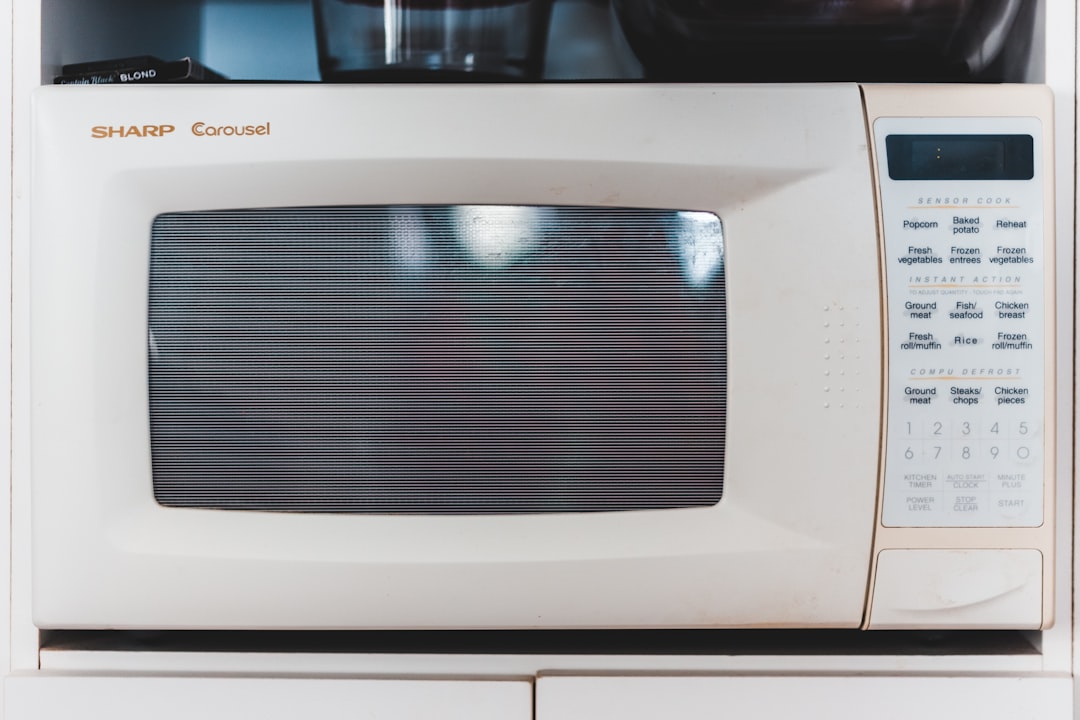
A convection oven moves hot air around the cavity with a fan, surrounding food with consistent, dry heat. That environment is exactly what baked goods need to brown on the outside, rise properly, and develop a crust. A standard microwave, by contrast, emits electromagnetic radiation that excites water molecules inside the food. The heat is generated internally and quickly, but the appliance can't produce the surface temperatures required to brown or crisp anything. The result is pale, rubbery exteriors on anything you'd normally want with a golden crust.
For everyday baking tasks like cookies, cakes, bread, and pastries, a dedicated convection oven consistently outperforms a standard microwave because dry, circulating heat drives the Maillard reaction responsible for that golden colour and satisfying texture. As KitchenAid explains, convection microwaves do exist as a middle-ground option, combining both technologies in a single unit. They're a practical choice for kitchens where counter space is tight. But as Lowe's buying guide notes, before you choose either appliance, you'll want to weigh baking performance, energy consumption, preheating time, and how compatible each one is with your regular recipes.
Real-World Baking Performance, Recipe Conversion, and Choosing the Right Appliance
Browning, Crust, and the Science Behind the Difference
The reason baked goods look and taste the way they do comes down to surface chemistry. The Maillard reaction, the process responsible for browning and flavour development, only kicks in above 280°F (138°C) at the food's surface. Convection ovens reach and hold those temperatures with ease. Standard microwaves don't heat surfaces at all in the same way; they heat from within, which means your cookies stay pale and your bread crust never forms properly.
Moisture behaves differently in each appliance too. Microwaves excite water molecules throughout the food, which traps steam inside and produces a soft interior. That's genuinely useful when you're reheating a muffin and don't want it to dry out. But it works against you when you're baking from scratch and need moisture to escape so a crust can form, or when you want a cookie with a crisp edge. If you've ever tried cooking eggs in a microwave, you'll recognise that steam-driven, gentle heating is the microwave's strength. Baking a loaf of sourdough is a different story entirely.
Where Convection Microwaves Fit In
Convection microwaves add a heating element and internal fan to standard microwave technology, which does allow limited browning. They're a genuine step up from a plain microwave for baking tasks. But as discussions on Cooking Stack Exchange point out, dedicated convection ovens still produce superior crust texture because their larger cavities allow better air circulation and more consistent heat distribution. The physics are straightforward: more space means more even airflow, which means more predictable results.
This is something Sophia Garcia saw firsthand across years of professional kitchen work. Convection ovens are the workhorse of professional kitchens because consistent airflow produces repeatable results, batch after batch. A convection microwave can handle a small-batch brownie or a single-serve mug cake, but it can't reliably replicate that consistency at any meaningful scale. The moving air in a full-size convection oven eliminates hot spots, reduces baking time by roughly 25%, and promotes even rise in delicate items like soufflés and chiffon cakes. That's why most professional chefs prefer them over both conventional ovens and microwaves for baking. You can read more about stove and oven options if you're considering upgrading your baking setup.
Temperature Conversion: Getting It Right
Recipe conversions aren't complicated once you know the rule. When you're baking in a convection oven instead of a conventional one, reduce the set temperature by 25°F (about 14°C). A recipe that calls for 350°F becomes 325°F in a convection oven, and you'll want to start checking for doneness 10–20% earlier than the recipe's stated time. The moving air simply cooks more efficiently, so the old times won't apply.
Converting for a convection microwave follows the same 25°F reduction, but there are a few extra steps. Because convection microwave cavities are smaller and airflow is less consistent than in a full-size oven, you'll want to check doneness 10–15 minutes earlier than the original time and rotate your baking tray halfway through. That rotation step is genuinely important, as home cooks on Reddit's r/Cooking have flagged uneven hot spots as one of the more noticeable downsides of cooking in a smaller cavity.
What to Bake Where
Knowing which baked goods suit each appliance saves a lot of frustration. Here's a practical breakdown:
Best baked goods for a convection oven:
- Cookies (even spread, crisp edges, consistent browning)
- Bread (proper crust and oven spring)
- Pies and tarts (flaky, set crusts)
- Multi-rack baking like sheet cakes or large batches of muffins
- Roasted vegetables and casseroles where caramelisation matters
Best baked goods for a convection microwave:
- Single-serve mug cakes
- Small-batch brownies
- Quick casseroles where saving time matters more than achieving a bakery-quality crust
- Reheating already-baked goods without drying them out
What a standard microwave does best:
- Softening butter before baking
- Melting chocolate
- Steaming vegetables
- Reheating baked goods
- Quick prep tasks that would take longer on the stovetop
A standard microwave has no practical role in baking from scratch. That's not a criticism, it's just not what the technology is designed for. Recognising that distinction makes choosing the right tool a lot easier. You can explore more ideas on the Food section of our site for recipe approaches that suit each appliance.
Energy Use and Practical Convenience
Energy efficiency is genuinely worth factoring in if you only bake occasionally. A convection microwave typically draws 900–1,200 watts and reaches cooking temperature almost immediately. A full-size convection oven draws 2,400–5,000 watts and needs 10–15 minutes of preheating before you can put anything in. For a single serving or a small batch, the convection microwave wins on both time and energy cost.
Countertop convenience is another real advantage, especially in studio apartments, dorm rooms, or secondary kitchen spaces where a full oven simply isn't available. As first-time buyers on Quora have asked, if you've never baked before and you're working with limited space, a convection microwave is a lower-commitment starting point that still produces real results.
The Size Problem with Convection Microwaves
The main disadvantage of a convection microwave oven is its small cavity size. Most models offer 1.5–2.0 cubic feet of interior space. That makes it physically impossible to bake a standard 9×13-inch sheet cake, run multiple cookie trays at once, or fit a full-sized artisan bread loaf. If your baking ambitions extend beyond single-serve portions, that limitation becomes a hard constraint, not just a minor inconvenience.
Cookware compatibility adds another layer of planning. The right bakeware matters in both appliances, but the rules are different. Metal pans are safe to use in convection mode, but those same pans can't go in when microwave mode is active. That means you'll need separate microwave-safe and oven-safe bakeware on hand, and you'll need to remember which mode you're operating in before you reach for a pan. As Lowe's notes, this is one of the practical realities of owning a combination appliance that's easy to overlook before you buy.
Which Appliance Should You Choose for Baking?
If serious baking is a regular part of your cooking life, whether that's bread, layered cakes, or multiple trays of cookies, a dedicated convection oven delivers results that a convection microwave simply can't match. The larger cavity, better airflow, and sustained heat distribution produce a level of consistency and crust quality that's hard to replicate in a smaller unit.
If space, budget, or energy savings are your priority and you bake occasionally in small quantities, a convection microwave is a genuinely capable compromise. It handles most everyday baking tasks well, and for someone just getting started, it's a reasonable first step. A standard microwave, while indispensable for prep work like melting chocolate or softening butter and for reheating baked goods, has no practical role in baking from scratch. As Lowe's buying guide puts it clearly, the right choice depends on how you actually cook.
At The Top Kitchen, our in-depth appliance reviews and comparisons are written by professional chef Sophia Garcia, who brings real restaurant experience to every recommendation. If you're trying to find the exact model that fits your kitchen size, budget, and baking goals, our guides are a good place to start.
Frequently Asked Questions: Microwave vs Convection Oven Baking
What is the disadvantage of a convection microwave oven?
The primary disadvantage of a convection microwave oven is its limited interior cavity, typically 1.5–2.0 cubic feet. That size prevents you from baking standard-sized sheet cakes, full loaves of bread, or multiple trays at once. Beyond capacity, convection microwaves also tend to have less consistent airflow than dedicated convection ovens, which can lead to uneven browning on larger or more delicate baked goods. For a full breakdown of pros and cons, Cooking Stack Exchange has a useful community discussion worth reading.
What is the equivalent of 350°F in a convection oven?
Set your convection oven to 325°F. The standard rule is to subtract 25°F (approximately 14°C) from whatever temperature the recipe calls for. You should also begin checking for doneness 10–20% earlier than the stated cooking time, because the fan-driven air circulates heat more efficiently than a conventional oven. According to KitchenAid, the same principle applies when using a convection microwave in convection mode.
Do chefs like convection ovens?
Yes. Most professional chefs strongly prefer convection ovens for baking and roasting. The fan-driven airflow eliminates hot spots, promotes even browning, and cuts baking time by roughly 25% compared to conventional ovens. In Sophia Garcia's experience across professional kitchens, convection ovens are the standard tool for producing consistent, repeatable results across large batches, a level of reliability that standard microwaves and convection microwaves can't match at scale.
How do you convert oven recipes for convection microwaves?
Reduce the recipe's temperature by 25°F (so 350°F becomes 325°F), start checking for doneness 10–15 minutes before the original time, and rotate your baking dish halfway through cooking to compensate for any uneven hot spots inside the smaller cavity. When operating in convection mode only, metal bakeware is safe to use. If you're switching to microwave mode, you'll need to swap to microwave-safe dishes instead.