The Right Refrigerator Temperature for Food Safety (And Why It Matters)
The safe refrigerator temperature range for food safety is 33–40°F (0.5–4.4°C), with 35–38°F recommended as the ideal target to slow bacterial growth without freezing food. Both the FDA and the USDA Food Safety and Inspection Service are clear on this: your fridge must stay at or below 40°F (4.4°C) at all times to prevent foodborne illness.
Why does that number matter so much? Bacteria like Salmonella, E. coli, and Listeria thrive between 40°F and 140°F, a window that food safety authorities call the "danger zone." A fridge sitting at 50°F is warm enough for dangerous bacterial growth on meat, dairy, and leftovers within just two hours. That's not a slow process – it's a fast one, and it's invisible until someone gets sick.
What makes this especially important is that most home refrigerators run warmer than their owners realize. Consumer Reports has noted that many household fridges operate above the safe threshold without the owner ever knowing, because the built-in display reads the set-point rather than the actual internal temperature.
Of all the things you can do to extend food freshness and prevent foodborne illness, getting the temperature right is the single most impactful. Our guide on what temperature a refrigerator is supposed to be at covers the baseline numbers in more detail if you want to go deeper on the fundamentals.
What You Need Before Adjusting Your Refrigerator Temperature
Before you touch the dial, you need two things: a standalone appliance thermometer and a basic understanding of how your fridge's control system works.
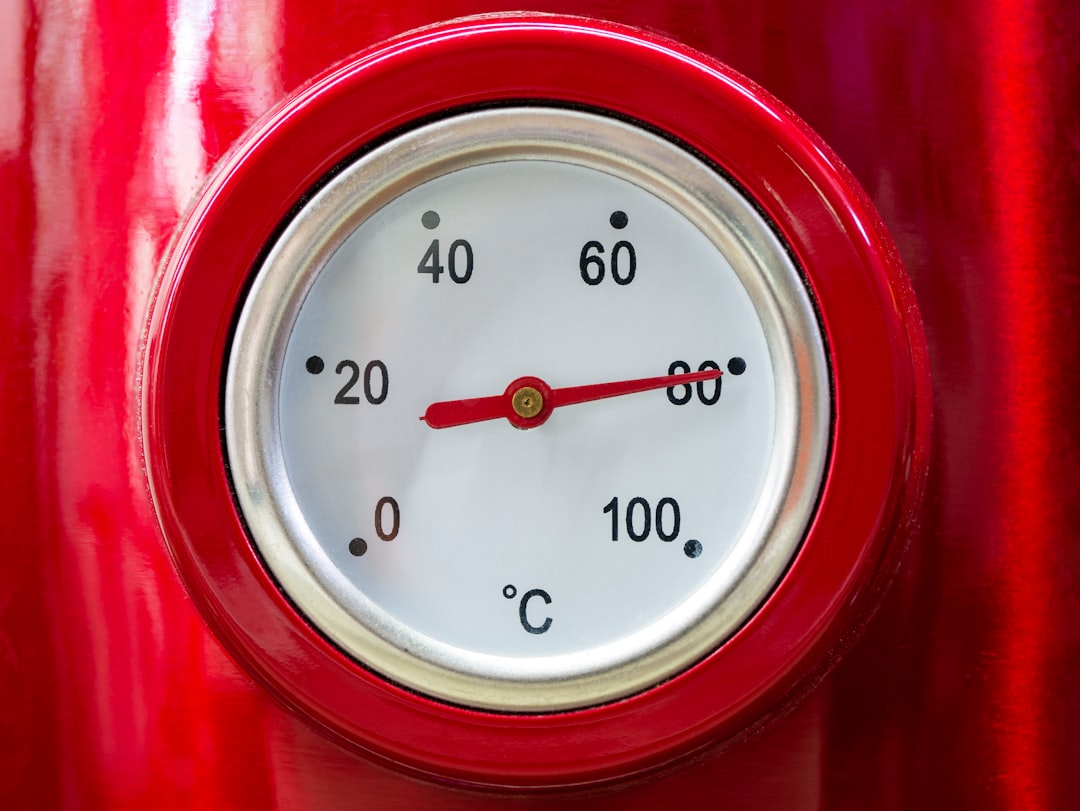
Why a standalone thermometer is non-negotiable. The digital readout on most modern fridges shows the set-point temperature, not the actual air temperature inside the compartment. The FDA recommends using a refrigerator thermometer to verify real internal temperature, because built-in sensors are typically positioned near the cooling element rather than in the food storage zone where it actually counts. A simple glass or dial refrigerator thermometer costs under $15 and is accurate enough for home use. If you want faster, more precise readings, a digital probe thermometer is a worthwhile upgrade.
Know your control type. Refrigerators use several different control formats, and each one behaves differently:
- Numbered dial (1–5 or 1–7): Higher numbers mean colder temperatures, not warmer. This trips up a lot of homeowners who accidentally warm their fridge while trying to cool it down.
- Digital keypad with degree display: The most straightforward. You set a target temperature and the fridge works toward it.
- Slider without numbers: The least precise. You'll rely entirely on your thermometer to know where you actually land.
If you have a French door model or a fridge with separate drawer zones, each section may need individual calibration, since the crisper zone and the main compartment often have independent controls.
One more rule: after any setting change, wait at least 24 hours before reading the thermometer. The interior air needs time to equilibrate, and checking too soon will give you a false reading. Consumer Reports reinforces this patience-first approach when calibrating fridge temperatures.
For brand-specific guidance, our articles on LG refrigerator temperature settings and the LG Smart Counter Depth Max refrigerator temperature show how these principles apply to real appliance models.
How to Check and Set the Right Refrigerator Temperature: Step-by-Step
To set the correct refrigerator temperature: place a thermometer on the middle shelf, read it after 8 hours, adjust the dial one step at a time, and wait 24 hours before re-reading, targeting 35–38°F (1.7–3.3°C). Here's the full process.
Step 1: Place Your Thermometer Correctly
Put your refrigerator thermometer in the center of the middle shelf. Don't place it in the door, near a vent, or on the bottom shelf. Leave it there for at least 8 hours – overnight is ideal – before taking any reading. This gives you a stable, representative measurement of the food storage zone, not a localized reading skewed by airflow or door proximity.
Step 2: Read the Thermometer and Diagnose the Problem
Once you've got your 8-hour reading, interpret it:
- Above 40°F (4.4°C): Your fridge is in the danger zone. Food is at risk. You need to cool it down immediately.
- 33–40°F (0.5–4.4°C): You're in the safe range. If you're above 38°F, consider nudging it slightly cooler.
- Below 33°F (0.5°C): Your fridge is too cold. Food near the back or top vents may be freezing, losing texture, and losing nutrients. Check our guide on how refrigerator temperature impacts food nutrition to understand what's at stake when temperatures drop too low.
Step 3: Locate Your Temperature Control and Make One Adjustment
Find your control dial or keypad. On a numbered dial with a 1–7 scale, setting 4 or 5 typically achieves 35–38°F in most models, though this varies by brand. Your owner's manual is the authoritative reference for your specific appliance. If you're at a digital keypad, simply set it to 37°F directly.
Change the setting by one increment only. Don't jump from 2 to 6 trying to hit your target faster – that leads to overshooting and potentially freezing food.
Step 4: Wait 24 Hours, Then Re-Check
This step is where most people lose patience and get inaccurate results. Refrigerator temperature changes are slow and gradual. Give it a full 24 hours after each adjustment, then re-read your thermometer. The USDA emphasizes that food safety depends on maintained temperature, not just the set-point, which is why patience during calibration matters.
Step 5: Check Temperature in Multiple Zones
Your fridge isn't one uniform temperature throughout. Door shelves run 5–10°F warmer than the back of the middle shelf. That means the door is the worst place to store raw meat, dairy, or eggs, even though it's the most convenient spot.
The FDA recommends using thermometer readings to understand your fridge's actual cold map, not just its average. Take readings in multiple spots and note the warmest zone.
Step 6: Organize Food by Zone Temperature
Once you know your fridge's temperature zones, store foods accordingly:
- Bottom shelf (coldest, especially toward the back): Raw meat, poultry, and seafood in sealed containers
- Middle shelves: Dairy, leftovers, cooked foods
- Top shelf: Ready-to-eat foods, cheeses, prepared meals
- Crisper drawers: Produce. These typically hold a slightly warmer, more humid microclimate – around 35–40°F – which slows wilting without freezing leafy greens
- Door shelves (warmest): Condiments, juices, butter
Knowing how long specific foods stay safe matters too. Check how long eggs stay good in the refrigerator and how long thawed turkey can stay in the fridge so you're not guessing at food safety margins.
Step 7: Re-Test After Disruptions
Your fridge temperature doesn't stay perfectly stable forever. Re-check your thermometer after any of these events:
- A large grocery haul that packs the fridge quickly with room-temperature items
- A power outage of any duration
- Moving or repositioning the appliance
- The start of summer, since ambient kitchen temperature directly affects interior refrigerator performance
As a tip from Sophia Garcia's restaurant days: professional kitchens log temperature twice daily. At home, you can approximate that habit simply by leaving a visible thermometer on the middle shelf where you'll notice it every time you open the door.
One more factor to keep in mind: a full refrigerator holds temperature better than an empty one. The food mass acts as a thermal buffer, reducing the temperature spikes that happen every time the door opens. And if your fridge can't hold temperature no matter what you do, dirty condenser coils may be forcing the compressor to work beyond its capacity. Cleaning the coils annually is a direct food safety measure, not just routine maintenance. Consumer Reports backs this up, noting that coil condition meaningfully affects temperature performance over time.
Pro Tips for Keeping Your Fridge at a Safe Temperature Year-Round
Getting the temperature right once is a good start. Keeping it there takes a few consistent habits.
Watch how long the door stays open. Every 30 seconds the door is ajar can raise the interior temperature by 2–3°F. Over dozens of daily openings, that adds up. Make a habit of getting everything you need in one opening rather than repeatedly reaching in while you think about what you want.
Adjust for the seasons. In summer, or in a hot kitchen, ambient temperatures can climb above 90°F, pushing the compressor to work harder and potentially letting the interior drift above 40°F. During warm months, check your thermometer more frequently than usual, and consider nudging the setting one increment colder as a buffer. The USDA specifically notes that environmental conditions affect refrigerator performance.
Cool leftovers before storing them. Never put a large, hot container of leftovers directly into the fridge. Divide them into shallow containers first so they cool quickly and don't raise the surrounding air temperature for an extended period.
Investigate freezing near the back wall. If leafy greens or fresh herbs near the back wall start freezing, your setting is probably one increment too cold, or a vent is blocked by a container that's been pushed too far back. Adjust the temperature up one step and rearrange items away from direct airflow. Our guide on what to do if your fridge is freezing food walks through all the common causes and fixes.
Test the door gasket. Worn or expired door seals allow warm air infiltration and are one of the most frequent reasons a fridge can't hold safe temperatures even when the dial is set correctly. Close the door on a piece of paper and try to pull it out. If it slides out without resistance, the seal needs replacing. For more serious issues like a fridge that simply won't cool, see our troubleshooting guide for when the freezer works but the fridge doesn't.
Know the power outage rule. After a power outage lasting more than 4 hours, check the thermometer before consuming perishables. Per the USDA, if the temperature climbed above 40°F for more than 2 hours, discard meat, dairy, and cooked leftovers. When in doubt, throw it out.
Dedicate the bottom shelf to raw proteins. Sophia Garcia recommends treating the bottom shelf as a raw-protein zone: raw chicken, beef, and seafood stored in sealed containers so any drip can't contaminate produce or ready-to-eat foods stored above. Consumer Reports highlights proper food placement as a key factor in preventing cross-contamination even when temperatures are correct.
For more on refrigerator types, features, and reviews, browse our full refrigerators category.
Refrigerator Temperature Settings: Frequently Asked Questions
Will food spoil at 50 degrees in the refrigerator?
Yes, and it'll happen faster than most people expect. The FDA and USDA both identify 40°F–140°F as the bacterial "danger zone." At 50°F, bacteria like Salmonella and E. coli double in population roughly every 20 minutes, meaning perishable foods enter unsafe territory within two hours. Raw meat, poultry, seafood, dairy, eggs, and cooked leftovers should all be discarded if your refrigerator has been sitting at 50°F for more than two hours. A refrigerator at 50°F is not safe for any of those food categories, period.
Is 20 degrees too cold for a refrigerator?
Yes, 20°F is far too cold for a refrigerator compartment. The effective range for fresh-food storage is 33–40°F (0.5–4.4°C). At 20°F, produce will freeze and turn mushy, eggs may crack as the liquid inside expands, and dairy products will separate and lose their texture. A temperature of 20°F belongs in a freezer, not a fresh-food section. If your fridge is hitting 20°F, increase the temperature setting immediately and check whether the thermostat has malfunctioned.
Should I set my fridge to 3 or 4?
On a 1–7 numbered dial, setting 4 is generally the right starting point. On a 1–7 dial refrigerator, setting 4 typically achieves approximately 37–38°F, placing it squarely in the ideal 35–38°F range. Setting 3 often lands around 40–42°F, which is borderline safe and leaves almost no margin for the temperature swings that come with opening the door. Start at 4, wait 24 hours, verify with a thermometer, and fine-tune from there. Remember that higher numbers mean colder temperatures on these dials.
Is a refrigerator safe at 50 degrees?
No. A refrigerator running at 50°F is not safe for storing perishable foods. The USDA and FDA both require refrigerators to stay at or below 40°F. At 50°F, harmful bacteria can double in number every 20 minutes. Any raw meat, poultry, fish, eggs, milk, soft cheese, or cooked food stored at that temperature for more than two hours should be thrown out. If your fridge can't maintain 40°F or below, it needs repair or replacement.
For more food safety guidance and storage tips across all food categories, visit our food category hub.