How Long Do You Boil Eggs for Hard Boiled? (Quick Answer + Full Guide)
Here's the direct answer: boil large eggs for 12 minutes after the water reaches a full rolling boil for a completely hard boiled egg with a firm, fully set pale yellow yolk. That single number is what most people are after, but the full picture is a little more interesting.
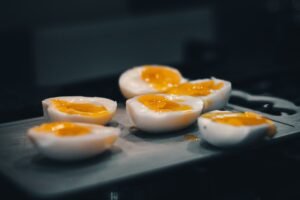
The 12-minute mark is for hard boiled. If you want softer results, the times break down like this: 6 minutes produces a soft boiled egg with a runny, liquid yolk; 8 minutes gives you a jammy yolk that's golden and slightly fudgy in the center; and 10 minutes produces a medium boiled egg with a custardy yolk that's just barely soft at the core. Always start your timer the moment the eggs go into already-boiling water.
One detail that trips people up is the starting method. Adding cold eggs to boiling water versus starting them in cold water changes your cook time by 1 to 2 minutes and also affects how easily the shells peel later. This guide uses the boiling-water-start method throughout, which is what RecipeTin Eats recommends and what the American Egg Board also supports for consistent results.
Beyond timing, this guide covers every doneness stage from soft to hard boiled, plus variables like egg size, your refrigerator's starting temperature, altitude adjustments, and stovetop type. You'll also find a dedicated FAQ section at the end. For even more depth on technique, our How to Hard Boil Eggs Perfectly guide and our How to Make Hard Boiled Eggs walkthrough cover additional methods and variations. If you're curious how hard boiling fits into the wider world of egg cookery, Ways to Cook Egg gives you the full picture.
What You Need Before You Start Boiling Eggs
Getting the timing right starts before the water even hits the stove. A few simple decisions about your ingredients and equipment make a real difference in the final result.
Egg size matters more than most people realize. All the timing recommendations in this guide are based on large eggs (Grade A or AA), which are the standard size sold in most grocery stores. If you're using jumbo eggs, add 1 to 2 extra minutes at each doneness stage. Medium eggs cook about 1 minute faster, so you'd pull them at 11 minutes for hard boiled instead of 12.
Your eggs' starting temperature affects the cook. Cold eggs straight from the refrigerator are the most common starting point for home cooks, and that's what all the timings here are calibrated for. Cold eggs actually produce slightly easier-to-peel shells than room-temperature eggs when you combine the boiling-water-start method with a proper ice bath afterward.
Egg age changes how easily they peel. This surprises a lot of home cooks, but eggs that are 7 to 10 days old peel significantly more easily than very fresh eggs. As an egg ages, the air cell inside the shell expands and the membrane between the shell and white loosens, which is what makes peeling clean and effortless. Very fresh eggs can be frustrating to peel no matter what you do. Before you boil, you can use the Egg Float Test Freshness Guide to check your eggs: fresh eggs sink and lie flat, older eggs stand upright, and both are perfectly safe to boil. Discard any egg that floats entirely.
Your saucepan size matters for even cooking. Use a pot large enough to hold all your eggs in a single layer with at least 1 inch of water covering them. Crowding eggs causes uneven cooking because water can't circulate properly around each one.
Prepare the ice bath before you turn on the stove. Fill a large bowl with cold water and plenty of ice cubes and set it on the counter next to the stove. The transfer needs to happen within 30 seconds of the timer ending, so there's no time to scramble for ice once the timer goes off. If you're looking for an alternative to stovetop boiling entirely, our Instant Pot Hard Boiled Eggs Method produces eggs that peel almost effortlessly every time.
As RecipeTin Eats and the American Egg Board both confirm, these preparation steps are what separate reliably good boiled eggs from inconsistent ones.
Step-by-Step: How Long to Boil Eggs for Every Doneness Level
Follow these steps in order and you'll get consistent results every time, regardless of your stovetop type.
Step 1: Fill Your Pot
Fill your saucepan with enough cold water to cover the eggs by about 1 inch once they're added. Don't use a pot that's much larger than you need. A right-sized pot brings water to a boil faster and wastes less energy while you wait.
Step 2: Bring Water to a Full Rolling Boil
Place the pot on your burner and turn the heat to high. You want a full rolling boil, where the water is bubbling vigorously across the entire surface, not just around the edges. How fast you get there depends on your stovetop. Induction cooktops reach boiling temperature faster than electric coil burners, sometimes by 2 to 3 minutes. Gas stovetops fall somewhere in between. The good news: none of this affects your egg cook time once the water is boiling. The heat of boiling water is the same regardless of what's producing it. If you're in the market for induction-compatible cookware, our guide to best cookware for induction cooktops can help you choose the right pot for the job.
Step 3: Lower the Eggs In
Using a slotted spoon or a spider strainer, gently lower cold eggs from the refrigerator directly into the boiling water one at a time. Don't drop them in from a height. That's how shells crack, and a cracked egg loses some white into the water while the remaining white sets unevenly.
Step 4: Reduce to a Steady Medium Boil
The moment all your eggs are in the water, reduce the heat to a medium boil. You still want active bubbling, but not the furious rolling boil from before. A gentler steady boil prevents eggs from crashing against each other and developing flat spots or cracks on the shell.
On a gas stovetop, this is straightforward since the heat responds immediately. On an electric coil burner, reduce the heat setting by one notch earlier than you think you need to, because the coil retains residual heat and stays hot longer than the dial suggests. You can find more stovetop-specific advice on our category/stoves pages.
Step 5: Set Your Timer by Doneness Level
Start the timer the moment all the eggs are in the water. Here are the exact times for large, refrigerator-cold eggs:
| Doneness | Time | Yolk Description |
|---|---|---|
| Soft boiled | 6 minutes | Fully liquid and runny |
| Jammy | 8 minutes | Golden, fudgy, slightly soft center |
| Medium boiled | 10 minutes | Custardy, just barely soft at center |
| Hard boiled | 12 minutes | Fully set, pale yellow, no green ring |
You can find a deeper breakdown of timing comparisons in our Boiled Egg Cooking Times Soft Hard guide and our How Long Boil Egg Soft Hard reference. Both RecipeTin Eats and beginner cooks on Reddit confirm that these timing windows are reliable across standard home kitchen conditions. This video demonstration also shows the doneness stages visually if you want to see exactly what each result looks like.
Boiling eggs past 13 to 14 minutes causes a chemical reaction between sulfur in the egg white and iron in the yolk, producing that gray-green ring you've probably seen. It's harmless but unpleasant, and it means the yolk is overcooked. The 12-minute mark is the sweet spot that sets the yolk completely while keeping it pale yellow.
Altitude adjustment: If you're cooking above 3,500 feet, water boils below 212°F (100°C) because of lower atmospheric pressure. Your eggs will cook more slowly as a result. Add 1 to 2 extra minutes at each doneness stage. Above 7,000 feet, add up to 3 extra minutes for fully hard boiled eggs.
Step 6: Transfer to the Ice Bath Immediately
The moment your timer ends, use a slotted spoon to transfer the eggs directly into the ice bath. Don't wait. Even an extra 2 minutes of sitting in hot water continues cooking the yolk. The ice bath stops carryover cooking completely. Running cold tap water over the eggs instead of using ice only partially stops the cooking process, and the yolk may continue setting for another 1 to 2 minutes. Leave the eggs in the ice bath for at least 5 minutes. For more guidance on the full technique, our How to Boil Eggs Perfectly and How to Boil Hard Boiled Eggs guides go deeper on method variations.
Step 7: Peel Properly
To peel cleanly, tap the wide end of the egg firmly against a hard surface, then roll the egg gently under your palm to crack the shell all over. Start peeling from the wide end, where the air cell sits. The membrane under the shell at that end tends to separate more easily, giving you a clean starting point and a peel that comes off in larger pieces.
Chef Tips: Common Mistakes, Peeling Tricks, and Storage Advice
After years of cooking professionally and testing these methods at home, here are the things that actually make a difference.
The ice bath is non-negotiable. The single biggest mistake home cooks make is leaving eggs in hot water after the timer ends, even for just a couple of extra minutes. Carryover cooking is real. Two minutes without an ice bath can push a jammy yolk all the way to fully set. Get the ice ready before you turn on the stove, and transfer eggs within 30 seconds of the timer ending.
Baking soda or vinegar helps with peeling. Adding a teaspoon of baking soda or a small splash of white vinegar to the boiling water raises the pH of the egg white slightly. This makes the membrane between the shell and the white separate more easily, which means cleaner, smoother peels. It doesn't affect the taste at all.
Don't boil at a furious rapid boil. As RecipeTin Eats notes, a gentler steady boil after you add the eggs reduces shell cracking and keeps the whites smoother. Eggs bouncing around in aggressively boiling water develop flat spots and cracked shells.
The spin test tells you everything. You can check whether an egg is fully hard boiled without cutting it open. Set it on a flat surface and give it a spin. A hard boiled egg spins quickly and smoothly. A raw or undercooked egg wobbles and slows down almost immediately because the liquid interior shifts as it rotates. This works every single time and leaves the egg intact.
Room-temperature eggs cook faster. If you store eggs on the counter rather than in the refrigerator, or if you've left them out for 30 minutes, they'll cook about 1 minute faster at each doneness stage. Adjust your timer accordingly. Most home cooks use cold eggs, so the timings in this guide are set for refrigerator-cold large eggs. RecipeTin Eats and discussions on r/cookingforbeginners both confirm this 1-minute difference for room-temperature eggs.
Batch cooking is easy. For meal prep, you can hard boil up to 12 eggs at once in a wide Dutch oven. The larger volume of water maintains a more stable boiling temperature throughout, which reduces timing inconsistency compared to cramming eggs into a small saucepan. The American Egg Board recommends keeping eggs in a single layer, which a Dutch oven handles easily.
Storage times to know: Hard boiled eggs in their shells last up to 1 week in the refrigerator. Peeled eggs should be stored submerged in cold water in an airtight container and last up to 5 days. Change the water daily to keep them fresh. Our How Long Are Eggs Good in the Refrigerator guide covers egg storage in detail. Never leave hard boiled eggs at room temperature for more than 2 hours.
Put those perfectly boiled eggs to good use. A 12-minute hard boiled egg with a fully set, pale yellow yolk is ideal for deviled eggs, egg salad, and Cobb salad. Our Devilled Egg Perfect Results Guide walks you through using properly boiled eggs in one of the most popular appetizers around.
Frequently Asked Questions About Boiling Eggs
Q: How long do I boil eggs for hard boiled?
Boil large eggs for 12 minutes after the water reaches a full rolling boil for a completely hard boiled egg with a firm, fully set pale yellow yolk. Transfer immediately to an ice bath for at least 5 minutes to stop cooking. Boiling longer than 13 to 14 minutes causes the gray-green ring around the yolk. You can find a full timing breakdown at our Hard Boiled Eggs Boil Time reference guide.
Q: How long do I boil an egg for soft boiled?
For a soft boiled egg with a fully set white and a completely runny, liquid yolk, boil large eggs for 6 minutes in already-boiling water. For a jammy yolk that is golden and slightly fudgy in the center, boil for 8 minutes. Always use an ice bath immediately after cooking. The American Egg Board recommends the same approach for consistent results.
Q: Why does my hard boiled egg yolk have a gray-green ring?
The gray-green ring forms when eggs are overcooked or left sitting in hot water after cooking ends. The heat causes sulfur in the egg white to react with iron in the yolk, creating iron sulfide, a harmless but unappealing gray-green layer. Keeping cook time to exactly 12 minutes and using an ice bath immediately prevents this entirely.
Q: Does it matter if eggs come straight from the fridge or are at room temperature?
Yes. Cold refrigerator eggs need the full recommended times: 6, 8, 10, or 12 minutes by doneness level. Room-temperature eggs (out of the fridge for 30 minutes) cook about 1 minute faster at each stage. Most home cooks use cold eggs, and the timings in this guide are calibrated for refrigerator-cold large eggs.
Q: How long should I boil jumbo or medium eggs compared to large eggs?
Jumbo eggs need 1 to 2 additional minutes at each doneness stage. Medium eggs cook about 1 minute faster than large eggs. For hard boiled: medium eggs need 11 minutes, large eggs need 12 minutes, and jumbo eggs need 13 to 14 minutes. Always use an ice bath regardless of size.
Q: Does altitude affect how long I should boil eggs?
Yes. At altitudes above 3,500 feet, water boils at temperatures below 212°F (100°C) because atmospheric pressure is lower. This means eggs cook more slowly; add 1 to 2 extra minutes to every doneness stage. At 7,000 feet or higher, add up to 3 extra minutes for a fully hard boiled egg.
Q: How long do hard boiled eggs last in the refrigerator?
Hard boiled eggs stored in their shells last up to 1 week in the refrigerator. Peeled hard boiled eggs should be stored submerged in cold water in an airtight container and last up to 5 days. Change the water daily to keep them fresh. Never leave hard boiled eggs at room temperature for more than 2 hours.
Q: How can I tell if an egg is hard boiled without cutting it open?
Spin the egg on a flat surface. A hard boiled egg spins quickly, smoothly, and stays upright. A raw or undercooked egg wobbles and spins slowly because the liquid inside shifts as it rotates. This works every time and does not damage the egg.
Q: Does the type of stovetop, gas, electric, or induction, change how long eggs take to boil?
The stovetop type affects how quickly your water reaches boiling point, not the actual egg cook time once boiling begins. Induction cooktops are the fastest at bringing water to a boil, followed by gas, then electric coil. Once water is at a full rolling boil, the 6, 8, 10, and 12-minute chart applies regardless of cooktop type. On electric coil burners, reduce heat earlier than you think because coils retain residual heat after you lower the setting. See our r/cookingforbeginners thread reference for real-world experiences across different stovetop types.