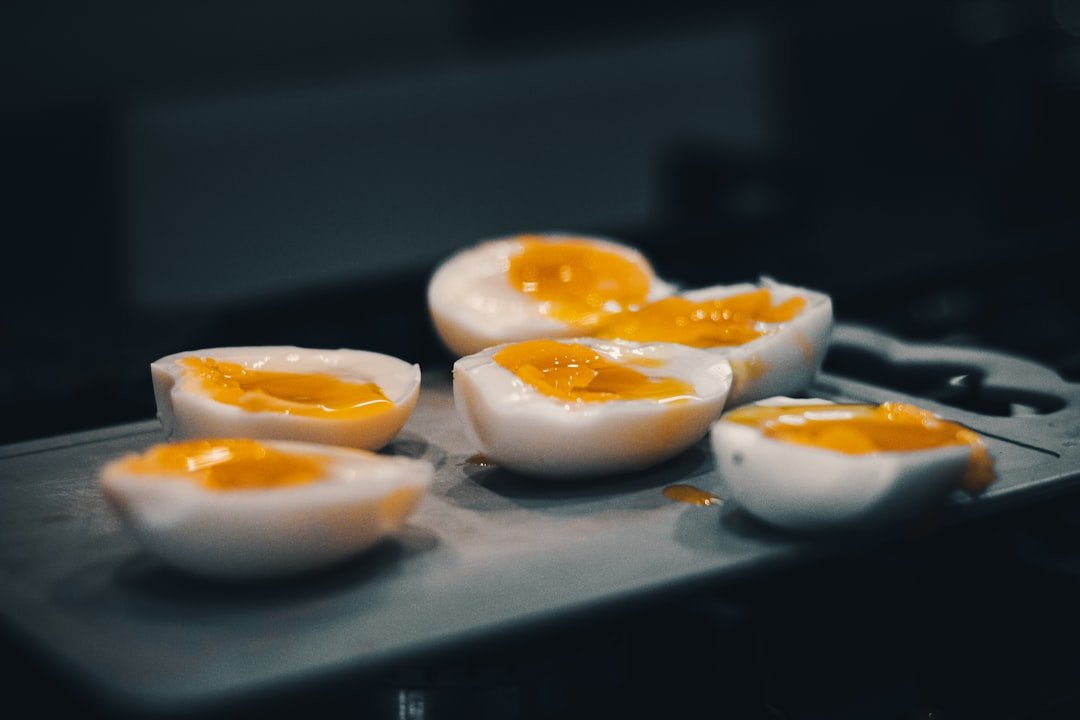
How Long Do You Hard Boil an Egg? (The Direct Answer)
Hard boil a large egg for 9–12 minutes after bringing cold water to a boil, or 10–12 minutes in already-boiling water, then transfer immediately to an ice bath. That's the short answer, but the specific minute within that range matters more than most home cooks realise.
For a large egg started in cold water, you want to bring the pot to a full boil first, then cook for 9–12 minutes for a fully set yolk with no greenish tinge. If you're dropping cold eggs into water that's already boiling, cook them for exactly 10–12 minutes from the moment they enter the pot. In both cases, 11–12 minutes is the sweet spot for a properly hard-boiled yolk that's fully set but still bright yellow.
The single most common error is letting eggs go past 12 minutes. At that point, iron sulfide forms at the boundary between the white and yolk, producing that greyish-green ring and a faint sulfurous smell. The egg is still safe to eat, but the texture and flavour take a hit. As this Reddit thread on hard boiling times confirms, a lot of home cooks are consistently overcooking without realising it.
Hard boiling sounds simple, and it is once you have the timing down. But skipping the ice bath and guessing at minutes are the two habits that consistently produce rubbery whites and chalky yolks. Our complete guide to hard boiling eggs perfectly and RecipeTin Eats' thorough breakdown both reinforce the same fundamentals we cover here.
For a full comparison of cooking times across all doneness levels, from soft-boiled to hard, see our boiled egg cooking times for soft and hard doneness guide. If you're curious how hard boiling fits within the broader world of egg preparation, our ways to cook an egg overview puts it all in context.
What You Need Before You Start Boiling
Getting the timing right is only half the job. Egg age and your equipment setup have a bigger impact on the final result than most people expect.
Egg age matters enormously for peeling. Eggs that are 7–10 days old peel far more easily than very fresh ones. As an egg ages, the pH of the white increases, which reduces how tightly the membrane sticks to the shell. If you've ever peeled a fresh egg and watched half the white come off with the shell, this is why. In professional kitchens, we'd deliberately set aside older eggs specifically for hard boiling and save the freshest ones for frying or poaching.
Before you cook, it's worth doing a quick freshness check. Our egg float test freshness guide explains the method fully, but the basics are simple: a fresh egg sinks flat to the bottom, a week-old egg tilts upward at one end, and a bad egg floats. Only use eggs that sink. If you're unsure how old your eggs are, our guide on how long are eggs good in the refrigerator gives you clear shelf-life timelines, and our how long eggs last reference covers raw egg storage in detail.
Know your egg size. Every timing chart in this guide, including ours, is benchmarked against standard large eggs (Grade A or AA), which weigh approximately 56–63 grams. If you're working with a different size, the times change. Our types of eggs explained guide breaks down sizing categories if you're unsure what you have.
Equipment you'll need:
- A medium saucepan with a lid
- A kitchen timer (your phone works fine)
- A slotted spoon
- A large bowl filled with ice water, big enough to hold all the eggs you're cooking
One more thing worth knowing: eggs straight from the refrigerator work better than room-temperature eggs for the cold-start method. The gradual temperature rise gives you more control over doneness, and the results are more consistent. RecipeTin Eats also recommends starting cold for the same reason.
Step-by-Step: How to Hard Boil an Egg Perfectly
Follow these steps in order and you'll get consistent results every time.
Step 1: Arrange the Eggs in a Single Layer
Place your eggs in a single layer at the bottom of a medium saucepan. Don't stack them or crowd the pan. Stacking eggs causes uneven cooking because some are deeper in the water than others. Cover with cold water by at least 1 inch above the tops of the eggs. If you're cooking on an induction cooktop, our best cookware for induction cooktops guide can help you choose a compatible saucepan.
Step 2: Bring to a Full Rolling Boil
Put the lid on and bring the water to a full rolling boil over medium-high heat. Depending on your burner strength and altitude, this typically takes 8–10 minutes. Don't walk away at this point. You want a rolling boil, not just steaming or gentle bubbling.
Step 3: Reduce Heat and Start Your Timer
Once the water reaches a full boil, reduce the heat to medium to keep a gentle, steady boil. Furious boiling knocks eggs around and toughens the whites. Start your timer immediately. Here are the target times by egg size:
| Egg Size | Cold-Start Cook Time |
|---|---|
| Small | 9 minutes |
| Medium | 10 minutes |
| Large | 11 minutes |
| Jumbo | 13 minutes |
These times produce a fully set yolk that's still bright yellow with no green ring. Our how to make hard boiled eggs guide uses the same benchmarks, and the RecipeTin Eats timing guide aligns closely with these figures.
Step 4: The Boiling-Start Method (If You Prefer It)
Some cooks prefer lowering eggs directly into already-boiling water with a slotted spoon. This method has its advocates, and it does produce a slightly more defined white-to-yolk boundary. If you go this route, add 1 extra minute to the times above. The cold egg causes a temperature drop in the pot, and that extra minute compensates. This discussion on r/cookingforbeginners reflects exactly how much debate there is around this question, so go with whichever method you find easier to execute consistently.
For the cold-start method, we find the results more forgiving and consistent across different egg sizes. The boiling-start method has supporters among experienced cooks, but for beginners it introduces more variables.
Step 5: Ice Bath (Don't Skip This)
The moment your timer goes off, transfer eggs to a bowl of ice water using a slotted spoon. Leave them there for at least 5 minutes. This step isn't optional. It stops carryover cooking immediately and causes the egg white to contract slightly away from the shell, which is what makes peeling so much easier. Hungry Onion's community thread on boiling times echoes this point repeatedly.
Step 6: Peel Correctly
To peel, crack the wide end of the egg first. That's where the air pocket sits, and starting there gives you a natural entry point under the membrane. Then roll the egg gently on the counter to create a network of small cracks across the shell. Peel under a trickle of cold running water, or peel directly in the ice bath. Try to get the membrane off with the shell in one continuous motion.
Altitude Adjustments
If you're cooking above 3,500 feet (1,067 metres), water boils at a lower temperature than at sea level. At 5,000 feet, water boils at approximately 202°F (94°C) instead of 212°F (100°C). Lower boiling temperature means slower cooking, so add 1–2 extra minutes per 1,000 feet above 3,500.
The Instant Pot Option
The Instant Pot 5-5-5 method has become our go-to for batch cooking: 5 minutes on high pressure, 5 minutes natural release, then 5 minutes in an ice bath. The 5-5-5 rule means 5 minutes Instant Pot high pressure, 5 minutes natural release, and 5 minutes in ice water, and it produces fully set yolks on large eggs reliably. Total time including pressure build-up runs 18–20 minutes, which is marginally faster than the stovetop cold-start method (20–22 minutes total).
For our full stovetop methodology, the how to boil eggs perfectly guide walks through every technique in detail. And if you want the most thorough single resource, the complete guide to hard boiling eggs perfectly covers everything from water temperature science to carton selection.
Pro Tips to Avoid the Most Common Hard Boiling Mistakes
Always use the ice bath. Without it, residual heat inside the shell continues cooking the egg for 2–3 minutes after it leaves the water. That's enough to push a perfectly timed large egg from bright-yolked to greenish-grey. The ice bath is what separates a reliable result from a guessing game.
Keep the boil gentle. A rapid, furious boil bounces eggs off each other and against the sides of the pot, causing cracks and toughening the whites. Once you reduce to medium heat, you want steady small bubbles, not a rolling churn.
Store them correctly. Hard-boiled eggs in their shells last up to 1 week in the refrigerator, according to USDA food safety guidelines. Once peeled, store them submerged in cold water in a sealed container and use within 5 days. Our refrigerator temperature settings for food safety guide is worth bookmarking to make sure your fridge is set correctly for safe storage.
Don't leave them out. Bacterial growth accelerates rapidly above 40°F (4°C), which is the USDA's food danger zone threshold. Don't leave hard-boiled eggs at room temperature for more than 2 hours.
Label your eggs. In professional kitchens during brunch service, we'd mark hard-boiled eggs with a small "B" using a food-safe marker before putting them back in the carton. It prevents the genuinely frustrating moment of cracking what you thought was a raw egg.
Know your nutrition. A single large hard-boiled egg delivers approximately 6 grams of protein, 5 grams of fat, and less than 1 gram of carbohydrate. That makes it one of the most nutrient-dense portable snacks you can keep in the fridge.
Once you've got hard boiling down, you'll find yourself making them constantly, whether for meal prep, our devilled egg perfect results guide, or a quick protein hit mid-week. If you want to expand your egg skills further, our how to cook an over medium egg guide is a natural next step.
Frequently Asked Questions About Hard Boiling Eggs
What is the 5 5 5 rule for boiling eggs?
The 5-5-5 rule is an Instant Pot method: cook eggs on high pressure for 5 minutes, allow a natural pressure release for 5 minutes, then transfer to an ice bath for 5 minutes. This yields fully set, firm yolks on large eggs and produces shells that peel more easily than many stovetop methods. Our Instant Pot hard boiled eggs guide covers the exact settings and valve positions.
How long does it take to boil eggs hard boiled?
Hard-boiling a large egg takes 11 minutes of cooking time after the water reaches a rolling boil, using the cold-start method. For smaller eggs, use 9 minutes; medium eggs take 10 minutes; jumbo eggs need 13 minutes. Always move them to an ice bath the moment the timer goes off. From cold pot to finished egg, plan for 20–22 minutes total. See our boiled egg cooking times for every doneness level for the full breakdown. The r/cookingforbeginners thread on hard boiling also reflects real-world timing experiences from home cooks.
Can diabetics have hard-boiled eggs?
A single large hard-boiled egg contains less than 1 gram of carbohydrate and no sugar, giving it a negligible effect on blood glucose levels. Eggs are widely recognised as a high-protein, low-carb food. That said, we're a kitchen resource, not a medical authority. If you're managing diabetes through diet, please consult your doctor or a registered dietitian for personalised advice.
How long does it take to boil an egg to the hard boil stage?
To reach the hard boil stage, a large egg needs 11 minutes of cooking time once the water is at a rolling boil (cold-start method), or 12 minutes if you lower it into already-boiling water. From the moment you turn the stove on with cold water in the pot, budget 20–22 minutes total. Only 9–13 minutes of that is active cooking time depending on egg size. At altitudes above 3,500 feet, add 1–2 extra minutes per 1,000 feet of elevation.