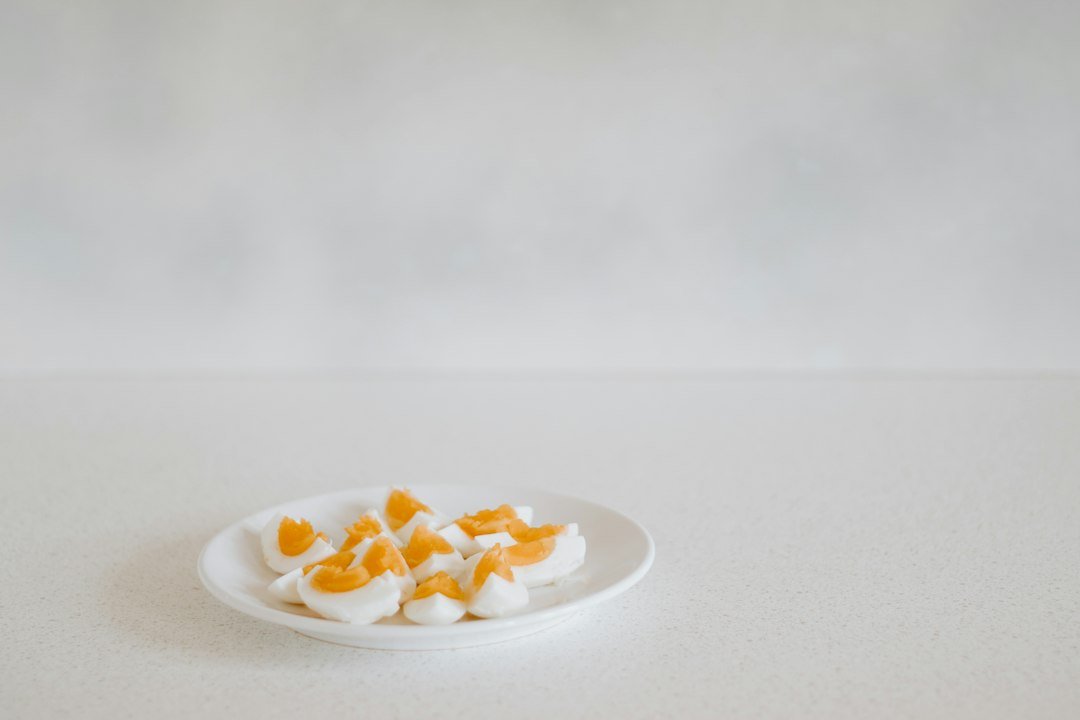
How to Hard Boil an Egg: The Quickest Answer First
To hard boil an egg with a fully set yolk and a clean, bright finish, bring a pot of water to a rolling boil, lower your eggs in gently, and cook them for exactly 12 minutes. Then transfer them straight to an ice bath and leave them there for at least 5 minutes. That's the whole method in a sentence, and if you follow it, you'll get consistent results every time.
The ice bath isn't optional. It stops carryover cooking the moment the eggs leave the pot. Without it, the residual heat inside the shell keeps raising the internal temperature for several minutes, which is exactly what creates that chalky texture and sulfurous smell that makes overcooked eggs unpleasant. Getting the timing even 2 minutes wrong is the difference between a jammy, satisfying yolk and a dry, rubbery one.
As Love and Lemons and the American Egg Board both confirm, precision at the timing stage is what separates reliably good hard boiled eggs from hit-or-miss ones. Hard boiling also happens to be one of the most nutritionally efficient ways to prepare eggs, delivering around 6g of protein per large egg with zero added fat, no oil, and no butter needed.
For a deeper look at the full method with additional technique variations, our guide on How to Hard Boil Eggs Perfectly covers every detail worth knowing.
What You Need Before You Start: Eggs, Equipment, and Freshness
Getting the right outcome starts before the water even boils. The eggs you choose and the equipment you use both affect how the finished eggs cook, peel, and taste.
Egg age matters more than most people expect. Eggs that are 7–10 days old peel significantly more easily than eggs bought and boiled the same day. This is because the pH of the egg white rises as the egg ages, which reduces how firmly the white adheres to the inner membrane. Fresh-from-the-farm eggs are wonderful for frying or poaching, but they're frustrating to peel after hard boiling. Before you cook, you can check freshness quickly with the Egg Float Test: a fresh egg sinks and lies flat, an egg that's a week old tilts slightly upward, and a spoiled egg floats. Never hard boil a floating egg.
Egg size affects your timing. Every boiling time chart, including ours, is calibrated for large eggs. If you're using medium eggs, subtract 1 minute from each timing recommendation. If you're using jumbo eggs, add 1 minute. Our Types of Eggs Explained guide breaks down sizing differences and how they affect cooking, and if you want guidance on sourcing quality eggs, our Vital Farms Egg Buyers Guide is a solid starting point for finding eggs worth boiling.
Your equipment matters too. According to both the American Egg Board and The Turquoise Table, you need a saucepan large enough for your eggs to sit in a single layer. Stack them or crowd them and you'll get uneven heating, which means some eggs will be undercooked while others go past the point you wanted. A slotted spoon or spider strainer lets you lower eggs into hot water without cracking them on impact.
If you cook at altitude, note that water boils at a lower temperature above 3,500 feet, which means standard boiling times will leave eggs undercooked. Plan to add 1–2 minutes to any timing listed here. And if you're cooking on an induction cooktop, the faster, more consistent heat means your water reaches boiling temperature more precisely, making your timer more reliable. We cover the best pots for the job in our Best Cookware for Induction Cooktops roundup.
Step-by-Step: How to Hard Boil an Egg (With Exact Timing for Every Yolk Level)
Here's the method we use, written so you can follow it on the first try. The steps below use the boiling-start method, which produces more consistent results than the cold-start method because your cooking clock begins at a precise, known temperature.
Step 1: Bring water to a full boil.
Fill your saucepan with enough water to cover the eggs by about an inch. Bring it to a rolling boil over high heat before adding anything.
Step 2: Lower eggs gently into the water.
Use a slotted spoon or spider strainer to lower each egg individually. This prevents cracking from impact. If your eggs came straight from the refrigerator, let them sit at room temperature for 5 minutes first (more on why in the next section).
Step 3: Set your timer based on your desired yolk texture.
| Yolk Texture | Boiling-Start Time |
|---|---|
| Soft (runny center) | 6 minutes |
| Medium (jammy, fudgy) | 9–10 minutes |
| Hard (fully set, no grey ring) | 12 minutes |
Keep the water at a gentle boil throughout, not a hard rolling boil. For our full timing breakdown across different doneness levels, see our dedicated guide on How Long to Boil Eggs.
Step 4: Transfer to an ice bath immediately.
The moment your timer goes off, use your slotted spoon to transfer each egg into a large bowl filled with cold water and plenty of ice. Leave them there for at least 5 minutes. This stops carryover cooking that would otherwise continue raising the egg's internal temperature by several degrees, pushing a perfectly timed 12-minute egg toward overcooked territory.
Step 5: Peel and serve.
Tap the wide end of the egg on a hard surface first, since that's where the air pocket sits and the shell separates most easily. Roll the egg gently across the surface to crack the shell all over, then peel under a thin stream of cold running water. The water works under the membrane and helps the shell slide away cleanly.
As Love and Lemons and The Pioneer Woman both recommend, adding a teaspoon of baking soda to your boiling water raises the pH artificially, mimicking the effect of older eggs and making even fresh eggs noticeably easier to peel. It's a simple trick worth using whenever you're working with very fresh eggs.
Alternative methods worth knowing:
The cold-start method places eggs in cold water, brings everything to a boil together, then cuts the heat. It's gentler on shells and can reduce cracking, but timing is harder to control consistently, particularly on gas burners where heat-up time varies. The Turquoise Table and the American Egg Board both discuss this approach in detail if you'd like to compare.
Steaming is another proven option: place eggs in a steamer basket over 1 inch of boiling water, cover, and steam for 13 minutes for a fully set yolk. The steam penetrates shells gently and evenly, and many cooks find steamed eggs among the easiest to peel.
If you own an Instant Pot, the 5-5-5 method (5 minutes high pressure, 5 minutes natural release, 5 minutes ice bath) produces fully set yolks with almost no shell-sticking. Our full walkthrough at Instant Pot Hard Boiled Eggs Method has every detail. And if you're curious how hard boiling compares to other techniques like poaching, frying, or scrambling, our Ways to Cook an Egg guide puts them all side by side.
Chef Tips: Avoiding Common Mistakes and Getting Perfect Results
Even with a good method, a few small errors can ruin an otherwise well-timed batch. Here's what to watch for.
The grey-green ring around the yolk is one of the most common signs of overcooked eggs. It's iron sulfide, formed when hydrogen sulfide from the egg white reacts with iron in the yolk at high temperatures. It's completely harmless, but it signals that the egg was cooked too long or left to cool without an ice bath. The fix is straightforward: stick to your 12-minute timer and always ice-bath immediately. The Love and Lemons guide reinforces this point well.
Rubbery, bouncy whites are a sign of cooking at too high a temperature. A hard rolling boil can cause the whites to seize tightly and turn tough. Keep your water at a steady, gentle boil throughout the cooking time for tender whites.
Cracked shells during cooking almost always come from thermal shock. Cold eggs dropped into hard-boiling water expand rapidly from the inside as steam builds up, which cracks the shell. Letting eggs sit at room temperature for 5 minutes before cooking, or using a slotted spoon to lower them in slowly, prevents most cracking. A splash of white vinegar in the water won't help with peeling, but it does coagulate any egg white that seeps through a crack and stops it from spreading, as noted by The Pioneer Woman.
At high altitude, standard timing charts won't get you there. Denver sits at 5,280 feet, and at that elevation you'll need to add at least 2 extra minutes to any sea-level time listed here. The Turquoise Table addresses altitude adjustments that most basic guides skip entirely.
On a gas stovetop, uneven flame distribution can create hot spots in the pan. Reducing to a steady, gentle boil midway through and rotating the pan occasionally keeps the batch cooking evenly.
Hard boiled eggs are also one of the healthiest ways to eat eggs overall. Our guide on the Healthiest Way to Prepare Eggs goes into the nutritional details. And once you've got a batch ready, our Devilled Egg Perfect Results Guide is a great next step.
Hard Boiled Egg FAQs
Q: How long do you boil an egg to hard boil it?
For a fully hard boiled egg with a set yolk and no grey ring, cook for exactly 12 minutes in already-boiling water, then transfer immediately to an ice bath for 5 minutes. For a soft, runny yolk cook 6 minutes; for a jammy medium yolk, cook 9–10 minutes. At high altitude, add 1–2 extra minutes.
Q: How do you peel a hard boiled egg easily?
The easiest peeling method starts with eggs that are 7–10 days old rather than fresh. After the ice bath, tap the wide end on a hard surface to crack the air pocket, roll the egg gently to loosen the shell all over, then peel under a thin stream of cold running water. Adding 1 tsp of baking soda to the boiling water also helps with fresh eggs.
Q: Why does my hard boiled egg have a green ring around the yolk?
The green-grey ring is iron sulfide, which forms when hydrogen sulfide from the egg white reacts with iron in the yolk at high heat over a prolonged time. It happens when eggs are overcooked or left to sit in hot water without an ice bath. It's harmless but avoidable: cook to exactly 12 minutes and use an ice bath immediately.
Q: How long do hard boiled eggs last in the refrigerator?
Unpeeled hard boiled eggs last up to 7 days in the refrigerator kept in their shells. Peeled hard boiled eggs last up to 5 days stored submerged in cold water in a sealed container, with the water changed daily. Never leave hard boiled eggs at room temperature for more than 2 hours. For full guidance, see How Long Are Eggs Good in the Refrigerator and our notes on Refrigerator Temperature Settings for Food Safety. The American Egg Board also has solid guidance on safe storage conditions.
Q: Should you start hard boiled eggs in cold or boiling water?
Both methods work, but the boiling-start method is more precise and recommended. Bringing water to a full boil first means you have an exact start temperature, making timing charts accurate and reproducible. The cold-start method is gentler on shells but harder to time consistently, especially on gas stovetops where heat-up time varies.
Q: Can you hard boil eggs in an Instant Pot or egg cooker?
Yes. For an Instant Pot, the 5-5-5 method works reliably: 5 minutes on high pressure, 5 minutes natural release, then 5 minutes in an ice bath. Dedicated egg cookers automate timing entirely and are the most foolproof option for beginners. Both methods produce easy-to-peel eggs with consistent results. See our full Instant Pot Hard Boiled Eggs Method for step-by-step instructions.