Greek Yogurt for Parfait: What You Need to Know Before You Start
The best Greek yogurt for parfait is full-fat (5%) plain Greek yogurt because it maintains firm layers, provides the highest protein content, and does not weep excess liquid that turns other ingredients soggy. That single choice shapes every result you'll get.
Here's why fat percentage matters so much. Full-fat Greek yogurt holds its shape cleanly between layers and keeps the parfait from turning watery within 30 minutes of assembly. Non-fat Greek yogurt, by contrast, releases excess whey relatively quickly and the layers collapse before you've even finished your first cup of coffee. As Foolproof Living's layered parfait guide points out, texture stability starts with the yogurt itself, not the toppings.
From a nutrition standpoint, the case for Greek yogurt is strong. It delivers roughly 17–20 grams of protein per 170g serving, compared to just 5–9 grams in regular yogurt, which makes it the far superior base for a high-protein breakfast parfait. The Spice Cravings Greek yogurt parfait resource highlights this protein advantage as one of the primary reasons to choose Greek over standard varieties.
One ratio that professional chefs return to again and again: one part granola to two parts Greek yogurt to one part fruit. That balance keeps textures distinct, protein front and center, and sweetness in check without muddying the layers.
There's one mistake worth avoiding immediately. Adding granola directly onto wet yogurt and then refrigerating the assembled parfait overnight turns granola completely soggy within two hours of contact with moisture. We'll cover how to prevent that in the step-by-step section below.
What You Need: Ingredients, Equipment & Yogurt Selection Guide
Choosing your yogurt
Full-fat or 2% Greek yogurt is the minimum fat percentage needed for stable parfait layers; non-fat varieties release too much liquid to hold their shape. Chobani Whole Milk Plain, Fage 5%, and Stonyfield Organic whole-milk Greek yogurt consistently rank as top performers for parfait use. Their twice-strained process produces a thick, spoonable texture that holds a clean layer edge without slumping. You can read more about the differences between plain varieties in our No Sugar Added Greek Yogurt Guide, which covers fat percentages and brand comparisons in detail.
If you're managing blood sugar, stick with Fage Total 0% Plain or Siggi's Plain, both of which contain zero added sugars. Pair them with low-glycemic berries rather than tropical fruits like mango or pineapple to keep the glycemic load low. Non-fat works here specifically because you're prioritizing sugar control over layer stability, and you'll be eating the parfait immediately rather than storing it overnight.
For those who want to make Greek yogurt from scratch, an Instant Pot on the Yogurt setting at 110°F for 8–10 hours produces a batch equivalent to four to five standard commercial containers. Our Instant Pot Hard Boiled Eggs Method page covers Instant Pot technique in depth if you're new to pressure-cooker functions, and if you want to add a protein-rich egg component to your parfait, our Types of Eggs Explained guide covers the best options.
Granola selection
Store-bought puffed granola goes soft quickly. Toasted granola made with rolled oats, honey, and oil, baked at 325°F for 20–25 minutes, creates denser, moisture-resistant clusters that stay crunchier roughly 40% longer against yogurt than the puffed variety. Cool it completely before using. Sources like Foolproof Living and Spice Cravings both recommend homemade or dense-cluster granola for exactly this reason.
Fruit pairings by season
Culinary professionals recommend fresh berries in summer, sliced stone fruits in early fall, and citrus segments or pomegranate arils in winter. Each of these provides enough acidity to cut through the richness of full-fat yogurt and prevent the parfait from tasting flat.
Equipment checklist
- Wide-mouth 16 oz mason jar or clear glass tumbler (visibility matters for layering)
- Small offset spatula for clean layer edges
- Kitchen scale for consistent 80g yogurt portions
- Fine mesh sieve lined with cheesecloth for pre-straining
How to Make a Greek Yogurt Parfait: Step-by-Step
Always layer Greek yogurt first at the bottom, then granola, then fruit. For make-ahead parfaits, store granola separately and add it only at the moment of serving. Follow these seven steps to get it right every time.
Step 1: Strain your yogurt
Even commercially strained Greek yogurt benefits from 15 minutes of additional draining through a fine mesh sieve lined with cheesecloth before assembly. This removes residual whey and produces a cream-cheese-like consistency that layers cleanly without pooling at the base of the jar. Don't skip this if you're making parfaits for guests or photographing them.
Step 2: Toast your granola
Spread granola in a single layer on a baking sheet and bake at 325°F for 20–22 minutes. Cool it completely on a wire rack before it touches the yogurt. Warm granola introduced to cold yogurt accelerates condensation and sogginess far faster than room-temperature granola would. The Project Meal Plan make-ahead parfait guide emphasizes this cooling step as non-negotiable for meal-prep parfaits.
Step 3: Prepare your fruit
Pat washed berries completely dry with paper towels. For stone fruits, toss slices in one teaspoon of lemon juice per cup of fruit. This prevents browning and adds brightness that balances Greek yogurt's natural tang. Dry fruit releases significantly less liquid into the yogurt layers, keeping your parfait intact longer.
Step 4: Layer in the correct order
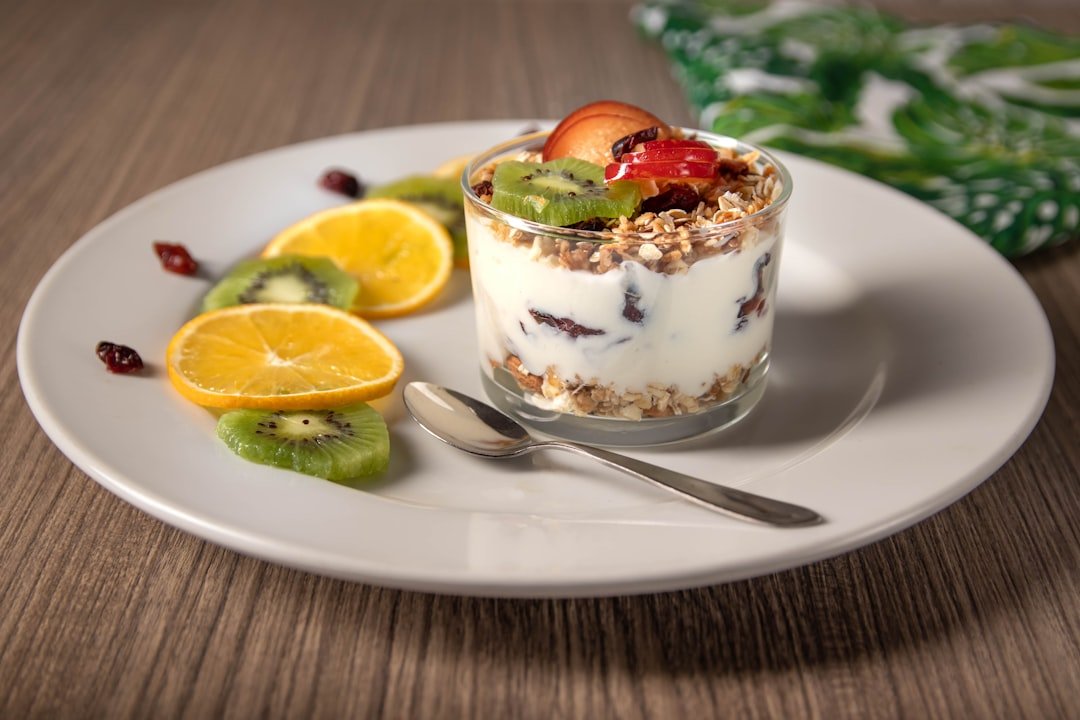
Start with an 80g base layer of Greek yogurt at the bottom of the jar. Add 20g of granola next, then 40g of fruit on top. This bottom-yogurt-first approach acts as a moisture barrier that slows granola saturation from below, a technique you'll also see in Muy Delish's kiwi parfait recipe and demonstrated clearly in this parfait assembly video on YouTube.
Step 5: Repeat and finish
Add a second 80g yogurt layer, another 20g granola portion, and top with the remaining fruit. Optional garnishes include a drizzle of raw honey (keep it to 5g maximum for diabetic-friendly versions), chia seeds, or hemp hearts for added fiber and protein.
Step 6: Serve immediately or store correctly
For immediate service, the parfait is ready. For make-ahead storage, seal the jar and refrigerate at 35–38°F. This is the USDA-recommended cold zone that slows fruit oxidation and yogurt separation for up to 24 hours before granola is added. Check our guides on refrigerator temperature settings and food safety and what temperature a refrigerator is supposed to be at to make sure your fridge is calibrated correctly before batch prepping.
Step 7: Add granola only at serving time
Store granola in a separate airtight container and spoon it on immediately before eating, regardless of how long the parfait has been refrigerated. This is the single most effective technique for preserving crunch in meal-prepped parfaits.
Pro chef technique: the offset spatula edge
After each yogurt layer, run a small offset spatula around the inner glass wall. It creates a visible clean stripe that's visually appealing and compresses the layer slightly, improving structural stability. It's a small step that makes a noticeable difference.
Pro Tips to Elevate Your Greek Yogurt Parfait Every Time
Flavor the yogurt base first
Whisking Greek yogurt with one teaspoon of vanilla extract and half a teaspoon of lemon zest per cup transforms the plain tang into something closer to pastry cream, without adding significant sugar or calories. It's a small step that makes the parfait taste intentional rather than assembled.
Block moisture with nut butter
Store a thin layer of nut butter between the yogurt and granola to block moisture migration and extend granola crunch by up to 45 minutes in a refrigerated assembled parfait. Just 10g spread along the surface of the first yogurt layer creates a fat barrier that actively prevents yogurt moisture from wicking upward. For a diabetic-friendly version, replacing honey with a quarter teaspoon of pure monk fruit sweetener or a small drizzle of unsweetened almond butter adds richness with negligible glycemic impact.
Switch to nut-based granola
Swapping standard oat granola for almond, pecan, or walnut-based granola raises the parfait's protein content by 4–6 grams per serving. The larger, denser clusters resist moisture longer than oat-only versions, giving you a longer window of crunch even in assembled, refrigerated parfaits. The Spice Cravings parfait guide specifically recommends nut-heavy toppings for this reason.
Batch prep for the week
Prepping five parfait jars on Sunday and storing them at 35–38°F (without granola) gives you a grab-and-go breakfast for the entire work week. Each jar stays food-safe for up to 5 days with fruit included and up to 7 days with yogurt only. The Project Meal Plan breakfast parfait guide has five specific flavor combinations worth bookmarking for variety. For general guidance on ingredient freshness and storage windows, our how long eggs last shelf life article applies the same food-safety principles to other refrigerator staples.
Cut your own fruit
Pre-cut supermarket fruit is processed in higher-humidity environments and releases 20–30% more liquid than fruit you wash and cut at home. That extra moisture accelerates yogurt thinning overnight, so it's worth the two minutes of prep. Our refrigerator temperature guide can also help you identify the coldest zones in your fridge for storing prepped fruit between uses.
Greek Yogurt Parfait FAQ
Is Greek yogurt safe for diabetics?
Yes. Plain, unsweetened Greek yogurt is safe for most diabetics. It contains 4–6 grams of naturally occurring lactose per serving, no added sugars, and 17–20 grams of protein that slows glucose absorption. The key is choosing plain varieties, since flavored Greek yogurts can contain 15–25 grams of added sugars, which significantly spike blood glucose. Always verify the nutrition label and consult your healthcare provider if you're managing blood sugar with medication. Our No Sugar Added Greek Yogurt Guide identifies the cleanest-label options available in 2026.
What kind of yogurt is best for parfaits?
Full-fat (5%) or 2% plain Greek yogurt is the best choice. The higher fat content provides a thick, stable texture that holds clean layers without releasing excess whey. Brands like Fage 5%, Chobani Whole Milk Plain, and Stonyfield Organic Whole Milk consistently produce the firmest, most layerable results. Non-fat Greek yogurt and regular non-strained yogurt are too thin and will pool liquid within 30–60 minutes of assembly, as Spice Cravings notes in their ingredient breakdown.
Is parfait good for diabetic patients?
A Greek yogurt parfait can be an excellent choice for diabetic patients when it's built correctly. Use plain, unsweetened full-fat Greek yogurt as the base, pair it with low-glycemic fruits like blueberries, raspberries, or strawberries, and choose a nut-based or low-sugar granola. That combination delivers high protein, fiber, and healthy fats that collectively flatten the post-meal glucose response. A poorly assembled parfait loaded with flavored yogurt, tropical fruits, and sweetened granola can exceed 40 grams of sugar and is not appropriate for diabetic management.
Does Greek yogurt help A1C?
Plain Greek yogurt with no added sugars is safe for most diabetics and may support A1C management when consumed as part of a low-carbohydrate diet. Emerging nutrition research links regular Greek yogurt consumption to modest A1C reductions in type 2 diabetic patients, primarily because high protein intake improves satiety, reduces overall caloric consumption, and limits carbohydrate load. Greek yogurt alone is not a treatment for elevated A1C. It works best as part of a broader dietary pattern under medical supervision.