What Is British Beans on Toast, and Why Does It Matter?
British beans on toast is made with haricot (navy) beans in a mild tomato sauce, typically Heinz brand, served on buttered thick-sliced white or wholemeal toast. That single sentence is the direct answer to what so many people outside the UK get wrong when they first attempt this dish. It's not an American invention, and it's not complicated. It's a distinctly British meal with a history stretching back over a century.
Heinz began marketing baked beans in the UK in 1901, and from there the dish steadily became a national staple across all income levels and age groups. By the mid-20th century, beans on toast was firmly embedded in British food culture as one of the most affordable, filling, and fast meals a household could put together. Christina's Cucina offers an excellent perspective on why the dish carries such cultural weight for Brits, and Serious Eats provides useful historical context on how tinned beans crossed the Atlantic and never looked back.
Nutritionally, it punches well above its weight. A standard serving delivers approximately 26 grams of protein, 15 grams of dietary fibre, and key micronutrients including iron and folate. That's a genuinely impressive profile for a meal that costs very little and takes under 10 minutes to prepare.
One thing to clarify immediately: British-style beans are not American baked beans. The UK version is cooked in a mild, slightly sweet tomato sauce with no molasses, no brown sugar, and no pork. The flavour is lighter and more savoury, which is exactly why it works so well on buttered toast. This guide covers authentic ingredients, step-by-step instructions, professional chef tips from Sophia Garcia, and classic variations including cheese, egg, and brown sauce.
What You Need Before You Start: Ingredients and Equipment
Authentic British beans on toast requires just a handful of staple ingredients, but the specific choices matter more than most people expect.
The beans: You need a 415g tin of Heinz Baked Beans, or an equivalent product using haricot beans in a plain tomato sauce. Kidney beans are not a substitute. American-style beans with molasses or smoked pork absolutely aren't substitutes. The flavour you're aiming for is mild, slightly sweet, and savoury with a smooth tomato sauce. Christina's Cucina and Bit of the Good Stuff both confirm that the tin is the authentic choice here, not a shortcut.
The bread: Thick-sliced white bread is the traditional choice, in the style of Warburtons or Hovis. Wholemeal is widely used as a higher-fibre alternative and is equally valid. What you should avoid is thin sandwich bread. It turns soggy almost immediately after the beans land on it, which ruins the texture entirely. As Lana's Cooking notes in their recipe snapshot, the bread's thickness is a structural decision, not just a preference.
The butter: Salted British butter is traditional. It's spread on the toast before the beans go on, and it's not optional. The fat layer between toast and beans slows moisture absorption and adds a richness that anchors the whole dish. Unsalted butter or margarine can be used in a pinch, but they do change the flavour.
Equipment: A small saucepan in the 1–1.5 litre range is all you need for the stovetop method. If you're cooking on an induction hob, an induction-compatible saucepan heats beans more evenly and reduces the risk of scorching. Our best cookware for induction cooktops guide covers compatible options worth considering.
You'll also need a can opener, a toaster or grill (broiler), and a wooden spoon. No specialist tools required.
Optional additions: A block of mature Cheddar for grating, a free-range egg for poaching or frying (more on egg types and their qualities if you're choosing), and HP or Heinz brown sauce as a condiment are the three most common additions.
If you'd prefer making beans from scratch rather than using a tin, dried haricot (navy) beans need an overnight soak followed by 60–90 minutes of simmering before you add any tomato sauce. Our split peas soup recipe covers legume preparation techniques across stovetop, slow cooker, and Instant Pot methods, which translate well to scratch-made beans.
How to Make British Beans on Toast: Step-by-Step Instructions
The full dish takes under 10 minutes from tin to table. Here's how to do it properly.
Step 1: Toast the bread
Place two thick slices of white or wholemeal bread in your toaster and toast to a medium-golden level. You want a firm surface that can hold the weight and moisture of the beans without collapsing within seconds. If you don't have a toaster, a cast iron skillet on the hob produces excellent results with a slightly charred crust. Light toast won't cut it here.
Step 2: Heat the beans
Pour the full tin of Heinz Baked Beans into your small saucepan over medium-low heat. Stir gently every 30–45 seconds for 3–4 minutes until they're heated through. Don't let them boil. A rolling boil causes the tomato sauce to reduce and turn sharp, and it toughens the bean skins. Serious Eats and Christina's Cucina both emphasise this point. Gentle heat, constant attention.
Step 3: Butter the toast immediately
The moment your toast pops, spread a generous layer of salted butter across the full surface while the bread is still hot. You want the butter to melt directly into the crust rather than sit on top of a cooled slice. This step makes a bigger difference than most people expect.
Step 4: Season the beans
In the final 30 seconds of heating, add a pinch of freshly ground black pepper and an optional small shake of Worcestershire sauce to the saucepan. Both Lana's Cooking and food.com's British beans on toast recipe mention seasoning as a step that most home cooks skip but really shouldn't. The Worcestershire sauce adds a quiet, savoury depth without changing what the dish fundamentally is.
Step 5: Plate correctly
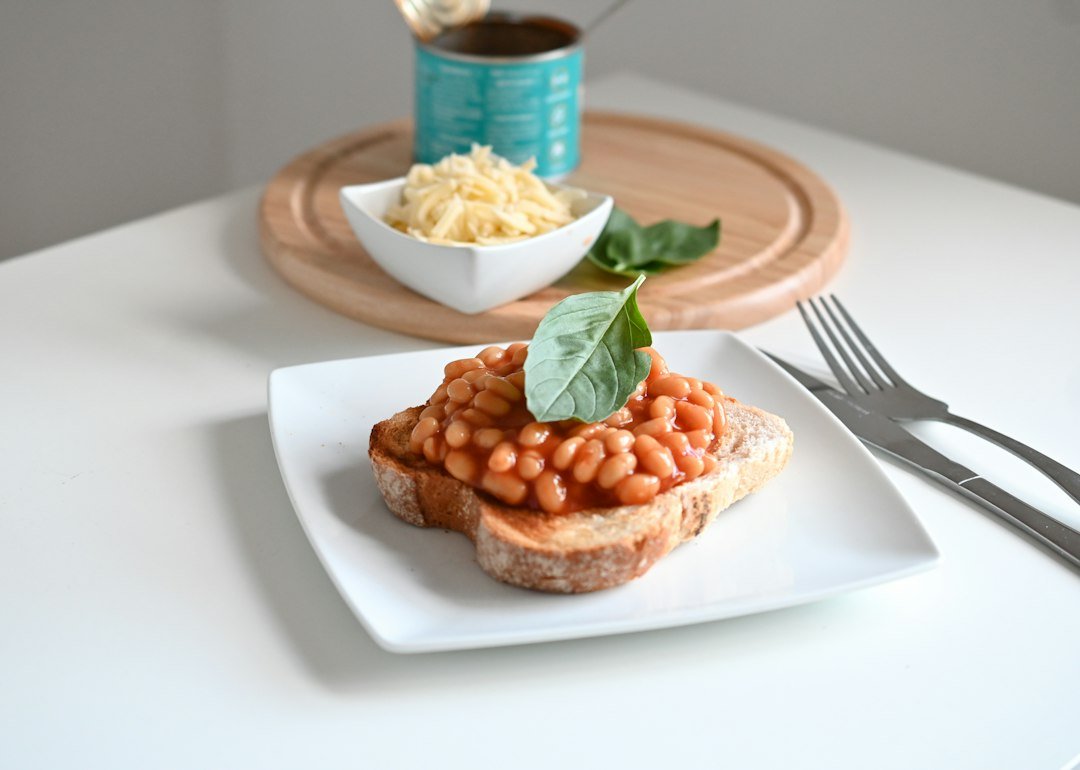
Spoon the beans evenly over both slices of toast, taking them all the way to the edges. Don't pour off the sauce. The sauce soaking gently into the surface of the buttered toast is a defining textural element of the dish, and it's exactly what Bit of the Good Stuff describes as the hallmark of a properly made plate.
Step 6: Cheese variation
If you want the cheese version, grate 30–40g of mature Cheddar directly over the hot beans immediately after plating. The residual heat from the beans melts the cheese in about 60 seconds without needing the grill.
Step 7: Egg variation
A fried or poached egg placed on top of the beans makes the dish more substantial and is a standard British café presentation. If you want guidance on getting eggs right, our article on the healthiest ways to prepare eggs covers both frying and poaching with clear technique notes.
Step 8: Brown sauce variation
HP brown sauce (or Heinz brown sauce) served on the side or drizzled lightly over the beans is a classic finishing touch. Never stir it into the saucepan during cooking. It's a condiment, not an ingredient.
Microwave shortcut: If you're in a real hurry, heating the beans in a microwave-safe bowl on high for 2 minutes, stirring halfway through, is a widely used method. It works, but the flavour is slightly flatter compared to the stovetop. For a deeper look at when a microwave is the right tool and when it isn't, our microwave vs convection oven comparison is worth a read.
Professional Chef Tips, Common Mistakes, and Regional Variations
The mistakes that ruin the dish
The most damaging error home cooks make is boiling the beans. Once the sauce hits a full boil, it reduces quickly, the sugars in the tomato concentrate and turn sharp, and the bean skins tighten up. You end up with a gluey, overly sweet sauce and firm, slightly chewy beans. Medium-low heat and gentle stirring for 3–4 minutes is all you need, as both Serious Eats and Christina's Cucina confirm.
The second mistake is toasting too lightly. Pale, soft toast collapses under the beans within a minute of plating. You want a firm, medium-golden result with a slight crunch on the underside. That crust is the structural foundation of the whole dish.
Skipping the butter is the third error. The fat layer isn't optional for flavour reasons, and it also slows moisture absorption from the bean sauce, giving you more time to eat the dish before the toast goes soft.
Sophia Garcia's chef-level upgrade
Sophia recommends adding a splash of Worcestershire sauce and a pinch of smoked paprika to the saucepan during the last 30 seconds of heating. It deepens the tomato sauce with a subtle smokiness and umami warmth without pushing the dish into unfamiliar territory. It's still beans on toast, just slightly more layered in flavour.
Regional variations worth knowing
Scottish variation: In Scotland, beans on toast often appears alongside a slice of Lorne (square) sausage and a fried egg as part of a full Scottish breakfast. The beans serve the same role they do in an English fry-up: a warm, saucy contrast to the meatier elements on the plate. Reddit's r/CasualUK thread on beans on toast has a lot of fun regional input on how Brits actually eat this dish day to day.
Welsh variation: Mature Caerphilly cheese is sometimes used instead of Cheddar as the grated topping, giving a sharper, slightly earthier flavour that works particularly well with wholemeal toast.
Modern café variation: Sourdough toast has become the bread of choice in many UK brunch spots and independent cafés. It provides a more complex flavour and a sturdier base than standard sliced white. It's not traditional, but it's a legitimate upgrade. Bit of the Good Stuff covers this trend in their 2024 baked beans on toast feature.
Storage and leftovers
If you've opened a tin and have beans left over, transfer them to a sealed container and refrigerate within two hours. They'll keep for 2–3 days. Never store them in the opened tin, as the metal can affect the taste of the sauce. Our refrigerator temperature settings guide covers safe storage temperatures for cooked and tinned foods.
For a well-rounded British-style breakfast spread, consider pairing your beans on toast with something lighter on the side. Our Greek yogurt parfait layering guide covers easy accompaniments that balance a heavier savoury plate.
And if you're prepping multiple elements at once and need sharp knife work for garnishes or bread slicing, our kitchen knife sharpening guide is a practical starting point.
Frequently Asked Questions About British Beans on Toast
Is beans on toast a British thing?
Yes, beans on toast is a distinctly British dish. While Heinz baked beans originated in the United States, Heinz began marketing them in the UK in 1901 and they quickly became embedded in British food culture as an affordable, filling meal. Today, beans on toast is considered quintessential British comfort food, eaten across all age groups for breakfast, lunch, and dinner. Christina's Cucina gives a detailed account of why Brits feel such ownership of the dish despite its American origins.
Are British beans on toast healthy?
Yes, beans on toast is a nutritionally solid meal. A standard serving (one 415g tin of Heinz Baked Beans on two slices of wholemeal toast) delivers approximately 400–450 calories, 26 grams of plant-based protein, 15 grams of dietary fibre, and meaningful amounts of iron, folate, and potassium. It's naturally low in saturated fat. Choosing wholemeal bread and measuring your butter portion further improves the profile. Serious Eats and Lana's Cooking both highlight its nutritional density. For a protein-boosting addition, pairing with an egg (covered in our healthiest way to prepare eggs guide) takes the meal even further.
What kind of beans do they put on toast in the UK?
British beans on toast uses haricot beans, also called navy beans, in a mild, slightly sweet tomato sauce. In practice, the vast majority of British households and cafés use Heinz Baked Beans straight from the tin. These are distinctly different from American baked beans, which typically contain molasses, brown sugar, and sometimes pork. UK-style beans are lighter and more savoury. Bit of the Good Stuff covers the distinction clearly.
What are British breakfast beans called?
They're called baked beans in the UK. The name comes from the original American preparation method where beans were slow-baked in ovens, but the British tinned product is simmered in tomato sauce rather than baked. On café menus and supermarket shelves, they simply appear as "baked beans" and they're a standard component of a full English or full Scottish breakfast.