How to Hard Boil an Egg: The Simple Method That Actually Works
To hard boil an egg, place your eggs in a saucepan in a single layer, cover them with cold water by about 1 inch, bring the water to a full boil, then cook for exactly 10–12 minutes before transferring immediately to an ice bath. That's the whole method, and it works reliably every time.
Hard boiling is one of the most common egg-cooking techniques out there, yet overcooking by even 2–3 minutes produces a rubbery white and that telltale grey-green ring around the yolk. The good news is that avoiding both problems is straightforward once you understand what's happening inside the pot.
The cold-water start is the key. When you place eggs into already-boiling water, the sudden heat shock can crack the shells before you've even started cooking. Beginning with cold water lets the eggs and water heat together gradually, which means far fewer cracks and much more consistent results across different stovetop types, as both The Turquoise Table and RecipeTin Eats confirm with their own testing.
Hard boiled eggs are a foundational ingredient in so many kitchen staples: devilled eggs, egg salad, meal-prep protein bowls, and more. If you want to see where hard boiling fits alongside other techniques, our guide to ways to cook egg covers the full picture. Master this one method and you'll use it constantly.
What You Need Before You Start
Getting your prep right before the water even hits the stove makes a bigger difference than most people expect.
The eggs themselves matter. Eggs that are 7–10 days old peel significantly more easily than very fresh eggs. This happens because the pH of the egg white rises as the egg ages, which reduces how tightly the white clings to the inner membrane. If you bought eggs today, they'll cook perfectly but may fight you during peeling. You can check freshness before you start with the egg float test: a fresh egg sinks and lies flat, a week-old egg stands upright at the bottom, and a floating egg should go straight in the bin.
For a full breakdown of the egg varieties best suited to hard boiling, our types of eggs explained guide is worth a quick read before you shop.
Egg size affects timing. All cooking times in this guide are based on large (grade A or AA) eggs straight from the refrigerator. Extra-large or jumbo eggs need 1–2 additional minutes. We'll cover exact timing in detail in our how long to boil eggs hard boiled guide, but for this method, stick to 10–12 minutes for large eggs.
Equipment checklist:
- A medium saucepan (2–3 quarts), which fits up to 6 eggs in a single layer without overcrowding
- A slotted spoon for transferring eggs gently
- A kitchen timer (your phone works fine)
- A large bowl filled with cold water and at least one full tray of ice cubes
That's genuinely everything you need. Refrigerator-cold eggs are preferable here because the gradual temperature rise from cold water is already built into the timing. Room-temperature eggs will cook slightly faster, so if yours have been sitting on the counter, shave about a minute off your timer.
Step-by-Step: How to Hard Boil Eggs on the Stovetop
Follow these steps in order and you'll get a perfectly set white and a bright-yellow yolk with no grey ring, every time.
Step 1: Arrange eggs in a single layer.
Place your eggs directly in the bottom of your saucepan in a single layer. Don't stack them. Stacking causes uneven heat distribution and increases the chance of shells cracking when the water starts moving.
Step 2: Cover with cold water.
Pour in enough cold tap water to cover the eggs by at least 1 inch. That coverage ensures even, consistent heat around every egg. Cold water is non-negotiable here: it lets the eggs and water rise in temperature together, eliminating the thermal shock that causes cracking when you drop cold eggs into a hot pot.
Step 3: Bring to a full rolling boil.
Place the pan over medium-high heat with the lid on. Depending on your stove and the size of your pan, reaching a full rolling boil typically takes 8–10 minutes. Don't walk away entirely during this stage; you want to know the moment it hits a full boil so your timer is accurate.
Step 4: Reduce heat and start your timer.
Once the water is at a full rolling boil, reduce the heat slightly to maintain a gentle boil (vigorous, rapid boiling knocks eggs around and can cause cracks and tough whites). Now start your timer:
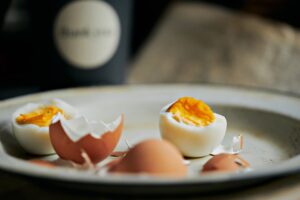
- 10 minutes: Fully set white, firm yolk that is still bright yellow with no grey ring. This is your go-to hard boil.
- 12 minutes: Slightly drier, more crumbly yolk that holds its shape cleanly when chopped. This is the better choice for devilled eggs and egg salad.
For comparison, RecipeTin Eats and The Turquoise Table both confirm that the 10–12 minute window is the sweet spot for large eggs. Our dedicated how long to boil eggs hard boiled guide goes deeper on timing variations if you want to fine-tune further.
Step 5: Know your other doneness levels.
If you want a soft-boil, pull the eggs at 6 minutes for a jammy, partially set yolk. Eight minutes gives you a medium-boil with set edges and a slightly custardy center. Our soft boil vs hard boil timing guide covers all the in-between stages in full detail.
Step 6: Transfer to the ice bath immediately.
The moment your timer goes off, use a slotted spoon to move every egg into your prepared ice bath. Don't rinse them under the tap and call it done; a full ice bath is what actually stops carryover cooking.
Step 7: Keep them in the ice bath for at least 10 minutes.
The ice bath does two things at once. It halts cooking so the yolk stays bright yellow rather than developing that grey-green sulfur ring. It also causes the egg to contract slightly away from the shell, which makes peeling noticeably easier, as The Pioneer Woman's testing demonstrates clearly. The grey-green ring, for what it's worth, is a chemical reaction between iron in the yolk and hydrogen sulfide in the white. It's harmless but entirely avoidable with an immediate ice bath transfer.
Step 8: Peel under running water.
Start from the wide end of the egg, where the air pocket sits. That pocket gives you a natural starting point to get under the membrane. Peeling under a thin stream of cool running water helps rinse away shell fragments and makes the whole process cleaner.
A note on altitude: If you're cooking above 3,500 feet, water boils below 212°F (100°C), which slows the rate at which egg proteins set. Add 1–2 extra minutes of cooking time per 1,000 feet above sea level. In Denver at 5,280 feet, for example, a standard 10-minute hard boil will likely need 12–13 minutes to reach the same result.
If you'd prefer a hands-off approach, our Instant Pot hard boiled eggs method is a reliable alternative, especially for large batches.
Chef Tips for Perfect Hard Boiled Eggs Every Time
A few small tweaks can make a noticeable difference in the final result.
Add a teaspoon of baking soda to the water. This raises the alkalinity of the cooking water, which in turn weakens the bond between the egg white and the inner shell membrane. The result is a noticeably easier peel, particularly with fresher eggs, a tip backed up by The Pioneer Woman's recipe notes.
Add a teaspoon of white vinegar if you're worried about cracks. Vinegar helps coagulate any egg white that leaks from a hairline crack during cooking, so you end up with a tidy pan rather than wispy strands of cooked white floating around.
Never use a rapid, vigorous boil for the full cook time. The agitation knocks eggs against each other and the sides of the pan, which causes cracks and produces rubbery, tough whites. A gentle, steady boil is all you need, as The Turquoise Table also emphasises.
Use older eggs when peeling matters. Eggs that are 7–14 days from purchase peel far more easily than same-day-fresh eggs. Carbon dioxide gradually escapes through the porous shell as eggs age, raising the internal pH and loosening the membrane's grip. If you're planning to make devilled eggs for a gathering, buy your eggs at least a week in advance.
No ice? Use the tap instead. If you don't have ice on hand, run the cooked eggs under cold tap water for at least 2 minutes. It's less effective than a full ice bath at stopping carryover cooking, but it's much better than leaving the eggs to cool on a plate.
Storage matters more than people realise. Unpeeled hard boiled eggs keep safely in the refrigerator for up to one week. Peeled eggs should be stored submerged in cold water in a covered container and used within 5 days. For a full breakdown, see our guide on how long eggs are good in the refrigerator. Store cooked eggs in the main body of the fridge, not in the door, where temperature swings are greater. Our refrigerator temperature settings food safety guide recommends keeping your fridge between 35°F and 38°F for optimal food safety.
Frequently Asked Questions About Hard Boiling Eggs
Q: How long do you boil eggs for hard boiled?
Boil eggs for 10–12 minutes once the water reaches a full rolling boil. Ten minutes gives you a firm, fully set yolk that is still bright yellow. Twelve minutes produces a slightly drier, more crumbly yolk that is ideal for devilled eggs and egg salad. Start timing only after the water is at a full boil, not from when you put the pan on the heat. Our full how long to boil eggs hard boiled guide covers every doneness level in detail.
Q: Why do hard boiled eggs get a green ring around the yolk?
The grey-green ring forms when iron in the yolk reacts with hydrogen sulfide released by the egg white under prolonged heat, producing iron sulfide. It's completely safe to eat but signals overcooking or delayed cooling. Transferring eggs to an ice bath immediately after cooking stops this reaction and keeps the yolk a clean, bright yellow, as RecipeTin Eats confirms.
Q: Why are my hard boiled eggs hard to peel?
Very fresh eggs are significantly harder to peel than eggs that are 7–14 days old. In fresh eggs, the egg white has a lower pH and bonds tightly to the inner shell membrane. As eggs age, carbon dioxide escapes through the porous shell, the pH rises, and the membrane releases more easily. Using eggs that have been in your refrigerator for at least a week, combined with a full 10-minute ice bath, will give you the cleanest peel.
Q: Should you start hard boiled eggs in cold or boiling water?
Starting in cold water is recommended for beginners and produces the most consistent results. Eggs and water heat together gradually, reducing the risk of shells cracking from thermal shock. The boiling water start method can yield slightly easier-to-peel eggs because the rapid heat sets the white quickly against the shell, but it increases cracking risk and demands more precise timing.
Q: How long can you store hard boiled eggs in the refrigerator?
Unpeeled hard boiled eggs keep safely in the refrigerator for up to 7 days. Peeled eggs should be stored submerged in cold water in a sealed container and used within 5 days. Never leave hard boiled eggs at room temperature for more than 2 hours, as bacterial growth accelerates significantly above 40°F. See our how long eggs are good in the refrigerator guide for more detail.
Q: Do I need to adjust cooking time at high altitude?
Yes. At altitudes above 3,500 feet, water boils at a lower temperature than the standard 212°F (100°C) at sea level. In Denver at roughly 5,280 feet, water boils at about 202°F. This slows the rate at which egg proteins coagulate. Add 1–2 extra minutes of boiling time for every 1,000 feet above sea level to achieve the same fully set hard-boiled result.
Q: Can you hard boil eggs in an Instant Pot?
Yes, and many cooks prefer it for consistently easy-to-peel results. Our Instant Pot hard boiled eggs method walks through the full process: high pressure for 5 minutes with a 5-minute natural release, then straight into an ice bath. The pressurized steam creates a slight gap between the egg white and the shell membrane, making peeling almost effortless even with very fresh eggs. If you're curious about other non-stovetop egg methods, our guide on how to do a poached egg in the microwave is another handy option to explore.