How Long to Cook a Boiled Egg (Soft, Medium & Hard)
If you want a quick answer: a soft boiled egg takes 6 minutes, a medium boiled egg takes 8 minutes, and a hard boiled egg takes 10–12 minutes when you lower the eggs into already-boiling water. Those three numbers will get you consistent results for a standard large egg at sea level, and they're the same benchmarks used in our detailed guide to soft vs. hard boiling times.
That said, a two-minute window changes texture dramatically because of what's happening inside the egg. The yolk begins to set at around 158°F (70°C) and fully solidifies above 170°F (77°C). That's why the difference between a jammy, slightly soft center and a chalky, fully solid yolk is often just 120 seconds on the clock.
The method you choose also shifts your timing. A cold-start approach, where eggs go into cold water that heats up together with them, produces results too, but you'll need to add roughly two minutes across all doneness levels. RecipeTinEats walks through both approaches clearly if you want a side-by-side comparison.
There's one more factor that basic guides often skip: not every egg is identical. Egg size matters, cold eggs straight from the refrigerator need 1–2 extra minutes compared to room-temperature ones, and breed, feed, and shell thickness can all affect how quickly heat moves to the center. Before you even touch the stove, it helps to know what type of egg you're working with, since variety can subtly shift your results. Eating Bird Food's boiled egg guide also flags egg size as a key variable worth accounting for.
What You Need Before You Start Boiling Eggs
Getting consistent results starts before the water heats up.
Egg size: Timing charts are built around large eggs, which are the universal standard. If you're using medium eggs, subtract about one minute from each timing benchmark. Jumbo eggs need an extra 1–2 minutes. Don't mix sizes in the same pot if you want them all to finish at the same doneness level.
Egg temperature: Eggs taken straight from the refrigerator sit at around 38°F (3°C). That cold core takes longer to heat through, so you'll need to add 1–2 minutes to your timer compared to room-temperature eggs. As RecipeTinEats notes, this is one of the most common reasons home cooks end up with undercooked centers despite following a recipe exactly.
Egg age: This one surprises people. Older eggs (roughly 7–10 days old) actually peel more easily than very fresh ones. As an egg ages, the pH of the white rises, which reduces how tightly it bonds to the inner shell membrane. That's a genuine advantage when you want clean, smooth peeled eggs. Elana's Pantry confirms this tip, and it's worth keeping in mind when you're shopping. You can check your eggs' freshness before boiling with a simple float test using our egg float test freshness guide, and if you're unsure how long they've been sitting, our egg shelf life guide will help you decide whether to cook or toss them.
Equipment: You need a saucepan large enough to hold your eggs in a single layer without crowding. Crowded eggs don't cook evenly because water can't circulate freely around each one. Beyond the pan, the three tools you genuinely can't skip are a kitchen timer, a slotted spoon for lowering eggs gently, and a bowl of ice water for stopping the cook at the right moment.
Step-by-Step: How to Boil an Egg to Your Preferred Doneness
Follow these six steps and you'll get repeatable results every time, regardless of your preferred doneness level.
Step 1: Bring your water to a rolling boil first
Fill a saucepan with enough cold water to cover your eggs by at least one inch, then place it over high heat. Wait until it reaches a full, rolling boil before you add any eggs. Starting with boiling water is the key to timing precision, because it means the cook clock starts at a known, consistent temperature.
Step 2: Lower the eggs in gently
Use a slotted spoon to lower each egg into the boiling water one at a time. Don't drop them from a height. The sudden impact of hitting the bottom of the pan, or another egg, is what causes shells to crack.
Step 3: Reduce to a steady medium boil
Once all eggs are in, reduce the heat slightly so the water settles into a steady, moderate boil. A violent rolling boil causes eggs to bounce around and crack against each other, which lets water into the white and affects texture. You want active but controlled heat.
Step 4: Set your timer for the right doneness
This is where your target matters. Here's what each time produces in a large, room-temperature egg:
| Doneness | Time | What you get |
|---|---|---|
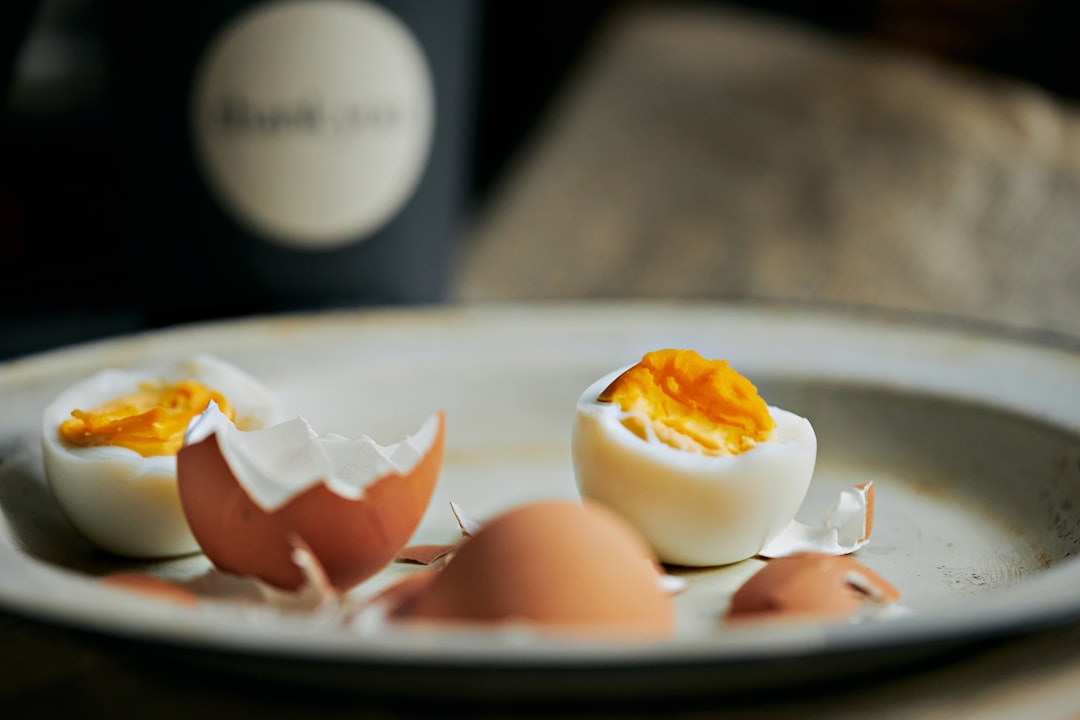
| Soft boiled | 6 minutes | Runny yolk, fully set white |
| Medium boiled | 8 minutes | Jammy, slightly soft yolk center |
| Hard boiled | 10 minutes | Fully set yolk, no grey ring |
| Very firm hard boiled | 12 minutes | Dense, sliceable yolk |
For a complete breakdown of hard-boiled timing at every stage, see our hard boiled egg timing guide. Eating Bird Food's guide and home cooks on Reddit's r/cookingforbeginners both consistently land on the same benchmark numbers, which gives us confidence in these times.
Step 5: Transfer to an ice bath immediately
The moment your timer goes off, move the eggs to a bowl of cold water filled with ice cubes. Leave them there for at least five minutes. This step isn't optional. Residual heat inside a freshly cooked egg continues raising the internal temperature after it leaves the water, which means a medium egg left to sit can finish cooking into hard-boiled territory on its own. The ice bath stops that process cold, and it's what prevents the grey-green ring you sometimes see around an overcooked yolk. That ring is iron sulphide, and it forms when eggs cook above 185°F (85°C) or sit in hot water too long. America's Test Kitchen recommends a timed boil paired with an immediate ice bath as the most repeatable method for consistent doneness across all levels.
Step 6: Peel from the wide base end
Start peeling at the wide, rounded base of the egg. That's where the air pocket sits, and cracking there gives you a natural gap between the shell and the white. Peeling under a thin stream of running water helps loosen the membrane and makes the shell come away more cleanly.
The cold-start method
If you prefer placing eggs in cold water and bringing everything to a boil together, the process works, but you need to add roughly two extra minutes to every timing benchmark. The advantage is that the whites tend to be more gently cooked and less rubbery at the edges. The disadvantage is that it's harder to repeat precisely, because your stove's heat output and your starting water temperature both vary. For step-by-step guidance on perfecting either method, our guide to hard boiling eggs perfectly covers both in detail.
Altitude adjustment
If you cook above 3,500 feet (1,067 metres), water boils at a lower temperature, around 202°F (94°C) rather than 212°F (100°C). That lower boiling point slows down how quickly eggs cook, so you'll need to add 1–3 extra minutes depending on your elevation. The higher you are, the more time you add.
Instant Pot alternative
If you're cooking a large batch, the Instant Pot 5-5-5 method (5 minutes on high pressure, 5 minutes natural pressure release, 5 minutes in an ice bath) delivers consistently peelable hard boiled eggs with minimal hands-on attention. RecipeTinEats also acknowledges pressure cooker methods as a reliable alternative to stovetop boiling for batch cooking.
Chef Tips for Perfect Boiled Eggs Every Time
A few targeted habits will make a real difference to your results.
Pierce the base before boiling. Use a pin or thumbtack to make a tiny hole in the rounded end of each egg before it goes in the water. This releases the small air pocket trapped inside and significantly reduces the chance of cracking during cooking.
Try steaming instead of submerging. Place a steamer basket over one inch of boiling water and steam your eggs instead of fully submerging them. Steam heat is gentler on the white, and the eggs tend to peel more cleanly. Eating Bird Food and Elana's Pantry both mention this as a worthwhile technique for easier peeling.
Add baking soda to the water. One teaspoon of baking soda per pot raises the pH of the cooking water slightly and helps loosen the shell membrane during cooking. It works regardless of egg age and is a useful backup when you're working with very fresh eggs.
Use eggs that are at least 5–7 days old for peeling. As discussed in the prep section, very fresh eggs (laid within 3 days) bond tightly to the inner membrane at low pH, making them frustrating to peel. Slightly older eggs release cleanly. RecipeTinEats flags this directly.
Invest in a digital timer. A dedicated kitchen timer or digital instant-read thermometer takes the guesswork out of the process. It's the single most practical equipment upgrade for getting consistent boiled egg results.
Storage after cooking: Unpeeled boiled eggs keep in the refrigerator for up to one week. Peeled eggs should be stored submerged in cold water in a sealed container and eaten within five days. Our guide to how long eggs are good in the refrigerator covers both cooked and raw egg storage in full.
Once you've got a batch of perfectly cooked eggs, put them to work. Our devilled egg guide is a natural next step, and if you want to explore other preparations, our full egg cooking guide covers everything from scrambled to poached. For a hands-off egg option on busy mornings, you might also want to check out how to poach an egg in the microwave.
Frequently Asked Questions About Boiling Eggs
What is the 5 5 5 rule for eggs?
The 5-5-5 rule is the Instant Pot method for hard boiled eggs: 5 minutes on high pressure, 5 minutes of natural pressure release, then 5 minutes in an ice bath. The result is a consistently set yolk with no grey ring and a shell that peels cleanly, which is why it's especially useful when cooking a large batch at once. Eating Bird Food recommends it as a reliable alternative to stovetop timing.
Are boiled eggs ok for diabetics?
Yes. Boiled eggs contain zero carbohydrates and have a glycaemic index of zero, so they don't cause a spike in blood sugar. They're a high-protein, high-fat food that supports satiety and blood sugar stability. That said, people managing diabetes should discuss overall diet choices with their healthcare provider, especially regarding cholesterol intake over time.
How do I hard boil eggs correctly?
Bring a saucepan of water to a rolling boil. Lower large eggs in gently with a slotted spoon, reduce to a steady medium boil, and cook for 10 minutes for a fully set yolk with no grey ring. Cook for 12 minutes if you want a very firm, sliceable result. Transfer immediately to ice water for at least five minutes. Peel from the wide base end under running water. Our hard boiled egg guide has the full breakdown. RecipeTinEats confirms these timings consistently produce the best results.
Do I put my eggs in the water before or after it boils?
Both approaches work, but they give different results. Adding eggs to already-boiling water gives you tighter timing control and more consistent doneness. The cold-start method produces gently cooked whites that are less likely to be rubbery, but it requires adding about two minutes to all your timing benchmarks and is harder to repeat accurately. For the most predictable results, add eggs to already-boiling water. If you enjoy other doneness styles, our guides to over medium eggs and eggs over easy cover pan-cooked options in similar detail.