How Long to Cook a Boiled Egg? The Direct Answer
A large egg boiled in already-boiling water takes 6 minutes for soft, 8 minutes for medium, and 12 minutes for hard. That's the most reliable starting point for home cooks, and it's the benchmark we use throughout this guide. For a more detailed breakdown of timing by doneness level, see our full How Long to Boil Eggs Hard Boiled reference guide.
If you're using the cold-start method instead (placing eggs in cold water and then bringing it to a boil), add roughly 1 to 2 minutes to each of those benchmarks. So that's 7 to 8 minutes for soft, 9 to 10 minutes for medium, and 13 to 14 minutes for a fully hard-boiled egg.
That said, cook time isn't fixed across every situation. Egg size, your starting water temperature, how high above sea level you are, and even how fresh your eggs are all affect the outcome. According to RecipeTin Eats, one of the most consistent tips across professional kitchens is starting eggs in already-boiling water rather than cold water, because it removes the unpredictable heating-up phase from your timing equation.
One detail that surprises a lot of people: older eggs are actually easier to peel than very fresh ones. The air cell between the shell and the egg white expands as eggs age, which makes the shell pull away more cleanly. We cover how egg variety can also affect cooking behavior in our Types of Eggs Explained guide.
The other non-negotiable step, backed by Eating Bird Food's testing, is the ice bath immediately after cooking. It stops carryover heat dead in its tracks and is the single most effective thing you can do for easy peeling.
What You Need Before You Start Boiling Eggs
Getting the result you want starts before you even turn on the stove. Here's what to have ready.
Choose the right eggs. Eggs that are 7 to 10 days old peel much more cleanly than eggs bought that morning. Very fresh eggs have a thin membrane that clings tightly to the shell and tears the white when you try to peel them. If you're not sure how old your eggs are, run a quick Egg Float Test before cooking: a fresh egg sinks flat to the bottom of a glass of water, a week-old egg tilts upward at an angle, and a bad egg floats to the surface. Discard any floaters. For more detail on how long eggs stay safe and fresh, our How Long Eggs Last Shelf Life guide is worth reading before your next grocery run.
Adjust for egg size. This guide uses large eggs as the standard, which is what most recipes assume. Small eggs need about 1 minute less cooking time than the benchmarks listed here. Jumbo eggs need 1 to 2 minutes more at every doneness level. If you cook a variety of sizes, keep that in mind when you set your timer. Eatingbirdfood.com has a helpful size-adjustment chart that cross-references doneness with egg size in one view.
Gather your equipment. You'll need a medium saucepan with enough cold water to cover eggs by at least 1 inch, a slotted spoon or spider strainer for lowering eggs gently into the water, a kitchen timer accurate to the second, and a bowl filled with ice water. Don't try to estimate time in your head. The difference between a jammy yolk and a rubbery one can be as little as 2 minutes, so a precise timer matters. As Elana's Pantry notes, setup is where most boiled egg failures actually begin.
Think about egg temperature. Eggs taken straight from the refrigerator are a better fit for the cold-start method, since both start cold together. Room-temperature eggs work better for the boiling-water-start method, because dropping a cold egg into boiling water can cause thermal shock and cracking. If you only have refrigerator-cold eggs and want to use the boiling-water method, lower them in slowly and reduce heat to a gentle boil immediately.
Step-by-Step: How to Boil Eggs to Any Doneness
The boiling-water-start method gives you more precise control over doneness, because your timing clock starts at a known, stable temperature rather than an unpredictable heating curve. Here's exactly how to do it, plus guidance for the cold-water method and alternative cooking approaches.
Method 1: Boiling-Water Start (Recommended)
Step 1: Boil the water first.
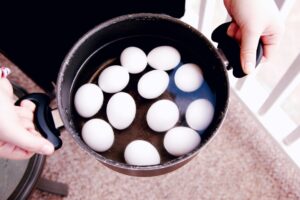
Fill a saucepan with enough water to submerge your eggs by at least 1 inch. Bring it to a full rolling boil over high heat before adding any eggs.
Step 2: Lower the eggs in gently.
Use a slotted spoon or spider strainer to lower eggs into the boiling water one at a time. Don't drop them. A controlled descent prevents cracks from impact. If an egg does crack, a teaspoon of white vinegar in the water causes the leaking white to coagulate quickly and seal the break.
Step 3: Reduce to a gentle boil.
Once the eggs are in, reduce the heat slightly so the water maintains a steady but gentle boil. A hard rolling boil knocks eggs against each other and the sides of the pan, which causes cracks.
Step 4: Set your timer based on your target doneness.
| Doneness | Large Egg (Boiling Water Start) |
|---|---|
| Soft-boiled (runny yolk) | 6 minutes |
| Medium-boiled (jammy yolk) | 8 minutes |
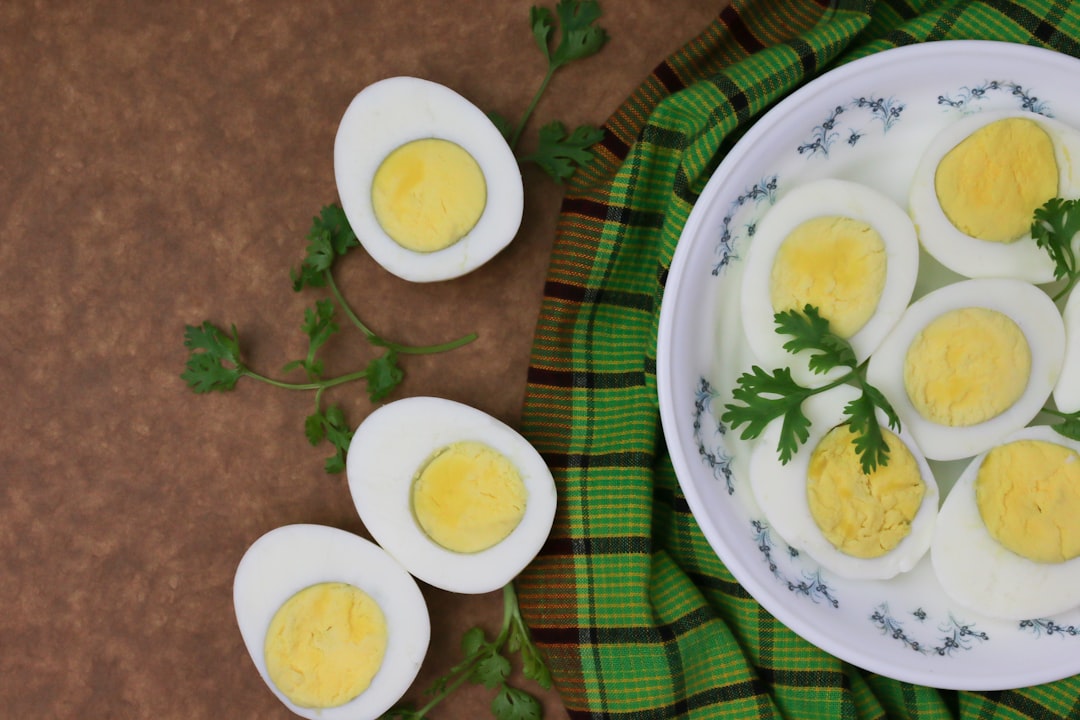
| Hard-boiled (fully set yolk) | 10–12 minutes |
Our How to Hard Boil Eggs Perfectly guide goes deeper on how yolk texture changes minute by minute across this range. For a full side-by-side comparison of soft vs. hard timing, see our How Long to Boil Egg Soft Hard reference. If you want a focused look at hard-boiled timing specifically, our Hard Boiled Egg Boiling Time page has you covered.
The RecipeTin Eats boiled egg guide and Eating Bird Food's method both recommend this boiling-water approach for its predictability. We agree, and our chef-tested timing above gives you more granular control over yolk texture than a single "boil for X minutes" instruction.
Step 5: Transfer to an ice bath immediately.
When the timer goes off, move eggs straight into a bowl of ice water. Leave them there for at least 5 minutes. This halts carryover cooking and causes the egg white to contract slightly away from the shell membrane, which makes peeling dramatically easier. Skip this step and a 6-minute soft egg will continue cooking on the counter and end up closer to medium by the time you peel it.
Step 6: Peel under cold running water.
Start from the wider end of the egg, where the air cell sits. A thin stream of cold water helps the shell slide off cleanly. Work under water rather than over a dry surface and you'll get a cleaner result every time.
Method 2: Cold-Water Start
Place eggs in a saucepan of cold water, covering by 1 inch. Bring to a boil over medium-high heat, then time from the moment a full boil is reached: 8 minutes for soft-boiled, 10 minutes for medium, and 13 to 14 minutes for a fully hard-boiled egg. This method is gentler on the shell and suits refrigerator-cold eggs well, but the variable heating rate of different stoves makes doneness harder to pinpoint exactly.
Altitude Adjustments
If you're cooking above 3,500 feet, water boils at around 203°F instead of 212°F. That lower boiling point transfers heat more slowly to the egg. Add 1 to 2 extra minutes to all timing benchmarks at high altitude, and stick to the top end of any range.
Grey-Green Ring: What Causes It and How to Avoid It
That grey-green ring around the yolk of an overcooked hard-boiled egg is caused by hydrogen sulfide from the white reacting with iron in the yolk. It's harmless, but it means the egg cooked too long, typically beyond 14 minutes. The ice bath prevents it by stopping cooking the moment it's needed.
Instant Pot Option
If you boil eggs frequently, the Instant Pot 5-5-5 method is worth knowing: 5 minutes at high pressure, 5 minutes natural pressure release, then 5 minutes in an ice bath. It produces consistent hard-boiled eggs with no grey ring and easy peeling, every time.
Quick Visual Check (No Cutting Required)
Spin the egg on a flat surface. A hard-boiled egg spins smoothly and fast. A raw or soft-boiled egg wobbles because the liquid interior shifts during rotation. It's a useful check if you've lost track of which eggs in the fridge are cooked.
For a broader look at all the ways you can prepare eggs, our Ways to Cook Egg guide covers everything from boiling to frying to poaching, including a guide to how to do a poached egg in the microwave if you want a faster option.
Chef Tips for Perfect Boiled Eggs Every Time
These are the details that separate reliably good boiled eggs from inconsistent ones.
Never skip the ice bath. Carryover heat continues cooking the egg for 1 to 2 minutes after it leaves the water. Without the ice bath, what you timed as a 6-minute soft-boiled egg effectively becomes an 8-minute medium egg by the time it hits your plate. The RecipeTin Eats guide and Eating Bird Food both treat this step as mandatory, and from a chef's perspective, we'd say the same.
Add baking soda for easier peeling. A teaspoon of baking soda in the boiling water raises the pH of the water, which weakens the bond between the shell membrane and the egg white. This is particularly helpful if you're working with fresh eggs that didn't have the 7 to 10 days of aging we recommended earlier.
Add vinegar to handle cracked eggs. A teaspoon of white vinegar in the cooking water causes any leaked egg white to coagulate almost instantly, sealing the crack and keeping the egg intact.
Don't overcrowd the pot. Use one layer of eggs only. When cold eggs go into hot water, the water temperature drops. With too many eggs, it takes longer to recover, throwing off your timing. Spread batches across multiple pots if you need to cook a lot at once.
Consider an electric egg cooker. These appliances use steam rather than boiling water and produce consistent results at every doneness level with no timing guesswork. If you're cooking eggs daily, it's a worthwhile piece of kit.
Storage after boiling. Peeled hard-boiled eggs can be stored submerged in cold water in the refrigerator for up to 5 days. Change the water daily to prevent off-flavors. Unpeeled hard-boiled eggs keep for up to 1 week in the fridge. For full storage guidance, including how long raw eggs last, our How Long Are Eggs Good in the Refrigerator guide has everything you need.
If you enjoy eggs but want to branch out beyond boiling, our guide on how to cook eggs over easy is a great next step.
Frequently Asked Questions About Boiling Eggs
What is the 5 5 5 rule for boiling eggs?
The 5-5-5 rule is an Instant Pot method for hard-boiled eggs: cook on high pressure for 5 minutes, allow a natural pressure release for 5 minutes, then transfer the eggs to an ice bath for 5 minutes. The result is a fully cooked, easy-to-peel hard-boiled egg with no grey-green ring around the yolk. It works consistently across large and extra-large eggs and eliminates the guesswork of stovetop timing. The 5-5-5 rule means 5 minutes high-pressure cooking, 5 minutes natural release, and 5 minutes in an ice bath, producing perfect hard-boiled eggs every time.
Are boiled eggs ok for diabetics?
Yes. Hard-boiled eggs contain zero carbohydrates, which means they have no direct impact on blood glucose levels. They're high in protein and healthy fats, both of which support satiety and stable blood sugar. Research suggests that eating up to 12 eggs per week doesn't negatively affect cardiovascular risk markers in people with type 2 diabetes. As always, individual dietary needs vary, so consult a healthcare provider for personalised guidance. The community discussion on Reddit's r/cookingforbeginners also reflects how widely boiled eggs are used as a high-protein, low-effort meal option.
Do you put eggs in cold or boiling water?
Both methods work, but each has trade-offs. Starting eggs in already-boiling water gives you precise, predictable timing (6 minutes for soft, 8 for medium, 12 for hard) and is the method preferred by professional cooks for that reason. Starting eggs in cold water and bringing them to a boil is gentler and reduces the risk of cracking from thermal shock, but the total time is harder to standardise because every stove heats at a different rate. If precision matters, use boiling water. If you're new to boiling eggs and worried about cracking, the cold-water start is the more forgiving choice. Eating Bird Food's overview lays out both approaches clearly if you want a second opinion.
Is 10 minutes long enough to boil an egg?
Yes, 10 minutes in already-boiling water is enough to produce a hard-boiled large egg with a fully set yolk. The yolk will be pale yellow and completely solid with no jammy or runny centre. For an extra-large or jumbo egg, go to 12 minutes to be safe. At high altitudes above 3,500 feet, add 1 to 2 extra minutes because water boils at a lower temperature and transfers heat more slowly to the egg.
Once you've mastered boiled eggs, there are plenty of great ways to use them. Our Devilled Egg Perfect Results Guide is a natural next step if you want to turn a batch of hard-boiled eggs into a crowd-pleasing dish.